Bringing a bike on the train opens up a huge amount of car-free travel — but the rules are far less consistent than for luggage, and vary by country, operator, and even by specific train type. What works on one regional line can be banned outright on the high-speed service one platform over. A little research before you buy tickets saves a very awkward moment at the platform gate.
Full-size bikes vs. folding bikes — a different game entirely
A folding bike, once folded and typically placed in a cover bag, is treated as ordinary luggage on the vast majority of train operators worldwide, including many that heavily restrict or charge for full-size bikes. This makes it by far the least complicated way to combine cycling with train travel, especially across multiple countries with different rules.
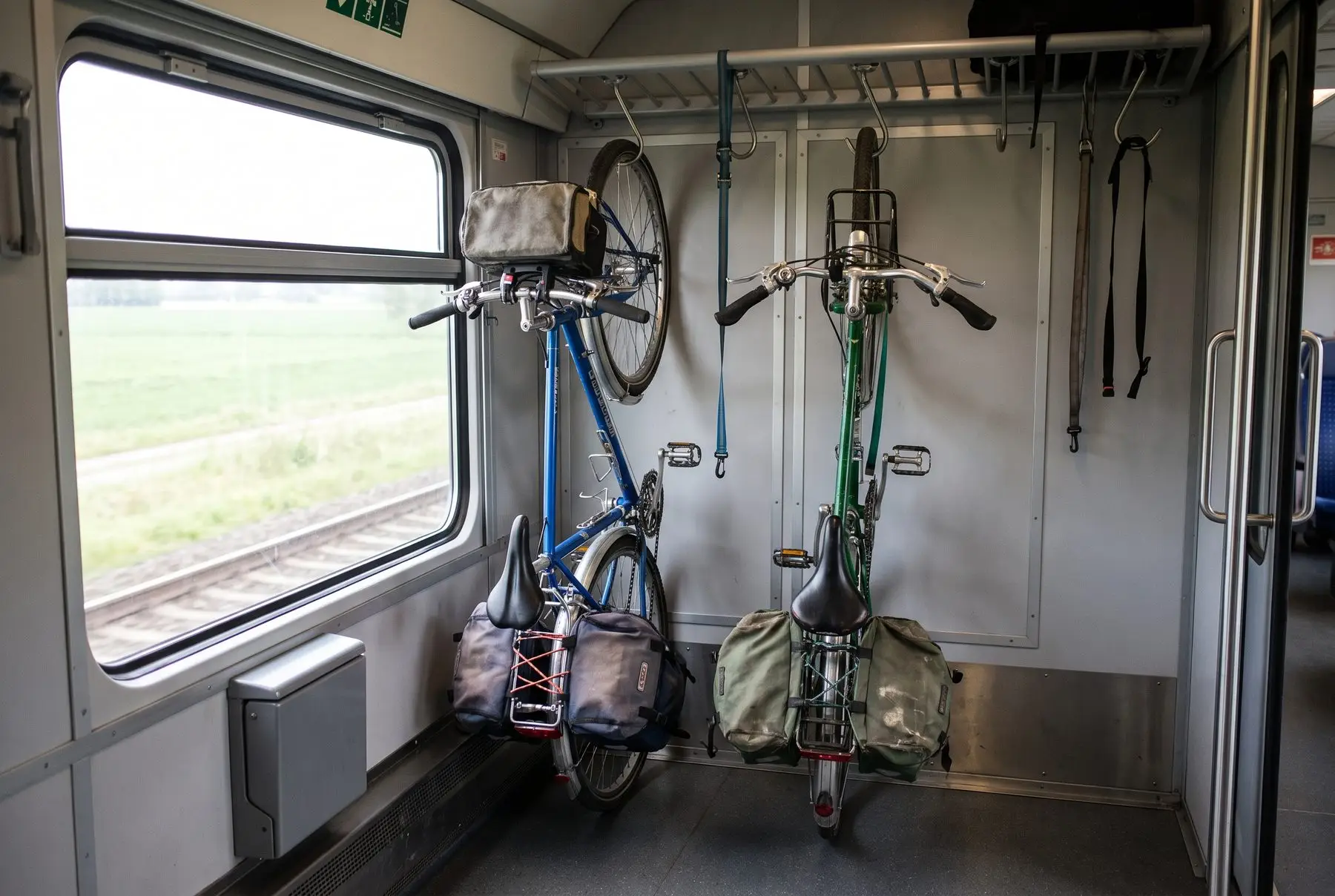
A full-size bike is a different proposition entirely. It usually needs its own space (a hook, a rack, or a dedicated multi-purpose area), is sometimes charged as a supplementary ticket, and on many high-speed and long-distance services needs a separate reservation with a strictly limited number of spaces per train.
Book the bike space as early as the seat
On trains that require a bike reservation, the number of bike spaces per train is often surprisingly small — sometimes just four to eight hooks per train, regardless of how many hundred human passengers it carries. On popular cycling corridors in summer, these can sell out before the ordinary seats do, so book the bike space the moment your travel dates are confirmed rather than as an afterthought.
Some operators only open bike reservations a set number of weeks or days before departure, which is worth knowing in advance so you are ready to book the moment the window opens, rather than finding all the spots already gone.
- Check the specific operator and train type — rules can differ between two trains on the same route.
- Note whether the bike ticket is a flat fee, distance-based, or bundled free with certain fare classes.
Rush-hour restrictions catch commuters and travellers alike
Many regional and commuter networks that otherwise allow bikes freely will ban or restrict them during weekday morning and evening peak hours, when trains are already packed with commuters and there simply isn't room. This rule is easy to miss if you're used to a network that allows bikes all day.
Weekend and off-peak travel is almost always more relaxed on these same networks, so shifting a bike-heavy leg to a weekend or midday departure often solves the problem entirely without needing a reservation at all.
Bagging, dismantling and other fine print
Some networks require even a full-size bike to have its pedals removed or turned in, wheels partially covered, or the whole bike placed in a protective bag to be accepted at all — rules that exist to protect other passengers' luggage and clothing from grease and moving parts. These requirements are easy to miss when reading only the headline 'bikes allowed' policy.
When in doubt, check the operator's specific bike policy page rather than a general FAQ, and carry a basic bungee cord or bag just in case — it weighs almost nothing and can save a rejected boarding.
Frequently asked questions
Do I need to reserve a spot for my bike?
Often, yes, for full-size bikes on high-speed and long-distance trains, where spaces are limited and sold separately from seat tickets. Regional and local trains are usually more relaxed. Folding bikes packed as luggage typically need no reservation at all.
Is it easier to travel with a folding bike?
Considerably. Once folded and bagged, most operators treat it as ordinary luggage rather than a bike, with no reservation, no extra fee and no time-of-day restrictions — a major advantage on a multi-country trip with varying bike rules.
Can I bring my bike during rush hour?
Often not, on regional and commuter networks that ban or restrict bikes during weekday morning and evening peaks when trains are already full. Off-peak hours and weekends are usually far more relaxed on the same lines.
Does the bike need to be bagged or covered?
Sometimes, yes — a number of operators require a protective bag or cover even for full-size bikes to protect other luggage from grease and moving parts. Check the specific operator policy rather than assuming, and carry a lightweight cover just in case.