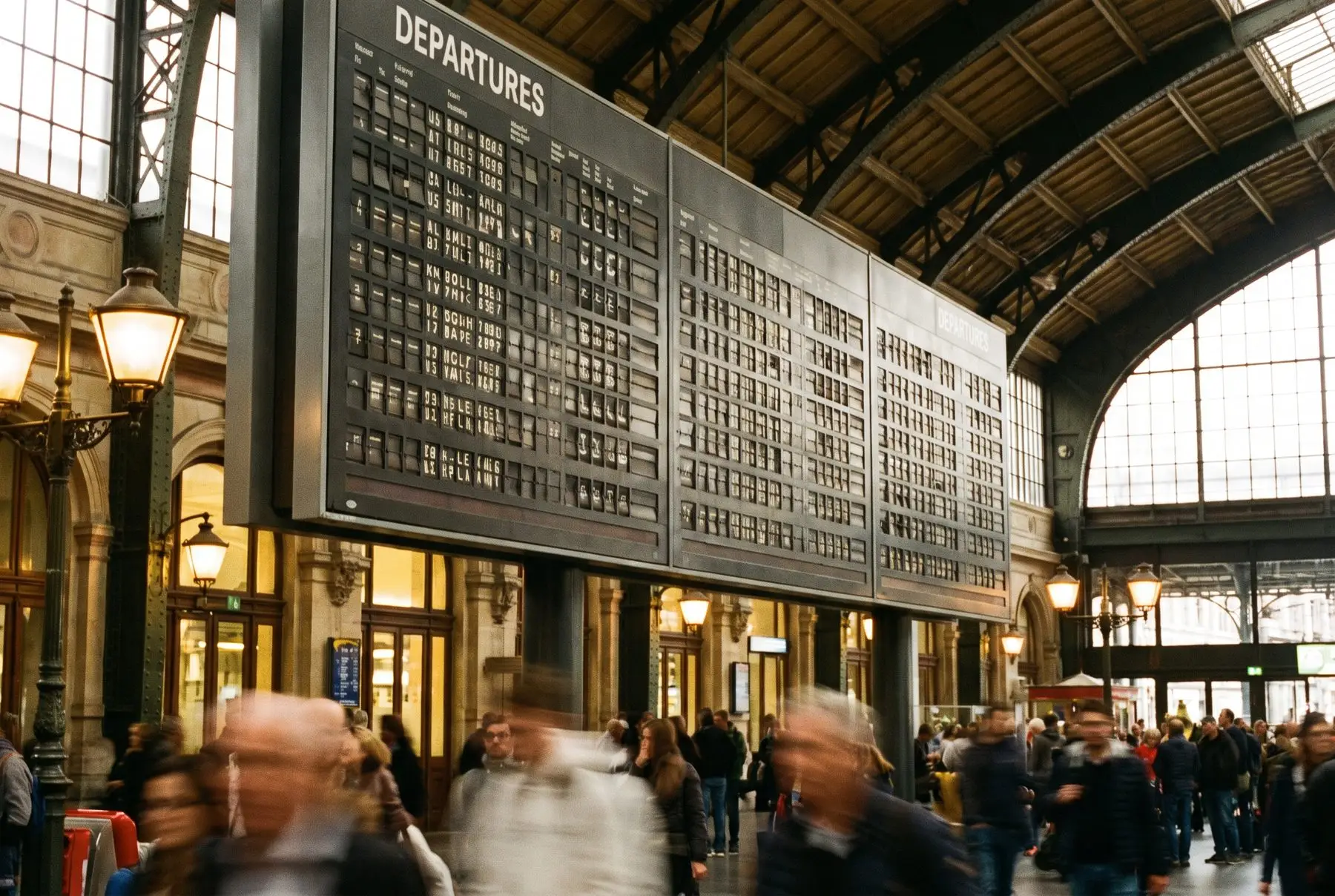
A timetable looks simple until you actually need it to be right — then the small print starts to matter. Tiny letters and symbols next to a departure time often mean 'weekdays only,' 'not on public holidays,' or 'summer season only,' and missing one of them is how people end up stranded. Learning to read the whole table, not just the big numbers, is a skill that pays off on every car-free trip.
Learn the footnote symbols first
Almost every timetable — printed or digital — uses small letters, numbers or symbols attached to specific departures, each pointing to a footnote at the bottom of the page or a linked note online. These typically flag things like 'runs Monday to Friday only,' 'does not run on public holidays,' 'runs only from June to September,' or 'requires a reservation.' Skimming past them is the single most common way travelers get caught out.
When you find a departure that looks perfect, treat any small mark next to it as a question, not decoration — find the note, read it fully, and confirm it applies to the specific day you're travelling.
Weekday, weekend and holiday schedules are not the same table
A route that runs every 20 minutes on a Tuesday can drop to hourly, or stop entirely, on a Sunday or public holiday. This trips up more travelers than any other timetable mistake, because it's easy to glance at a weekday schedule during planning and then travel on a Saturday without rechecking.
Many timetables also carry separate summer and winter versions, especially for ferries, mountain routes and coastal trains — a service that runs hourly in July might run twice a day, or not at all, in January. Always confirm you're looking at the schedule for your actual travel dates.
- Look for a "type of day" selector or column — often labelled by weekday abbreviations or a calendar icon.
- When in doubt, call or message the operator directly — a two-minute check beats a wrong assumption.
Read the connection, not just the two times
A connection that shows 20 minutes between arrival and departure on paper can be tight or comfortable depending on details a plain timetable doesn't show: whether the two trains use the same platform or opposite ends of a large station, whether there's a ticket gate or passport check in between, and how reliable that specific route is for on-time running.
For an unfamiliar or important connection, look up the station layout in advance and add extra buffer if you'll be carrying luggage, traveling with kids, or transferring between two different operators who don't coordinate delays with each other.
Trust the source, not just the number
The most current, reliable source is almost always the operator's own app or website, or the physical board at the station — not a search-engine snippet, a screenshot shared in a forum, or a schedule saved from a previous trip. Operators update timetables for engineering works, seasonal changes and one-off disruptions far more often than most third-party sites catch.
For multi-leg international trips, a pan-European or national rail planner is usually more accurate than a general map app for train-specific details like reservation requirements and platform notes, though it's still worth a final check against the operator directly for anything time-critical.
Frequently asked questions
What do the letters and symbols on a timetable mean?
They point to footnotes with exceptions — commonly which days of the week a service runs, whether it skips public holidays, whether it only operates in a particular season, or whether a reservation is required. Always find and read the actual footnote rather than guessing.
Why do weekend timetables differ so much from weekdays?
Operators typically run their densest schedules for commuters on weekdays, then cut frequency on weekends and holidays when demand drops — on some regional or rural routes this can mean half the trains, or none in the evening at all.
How much time should I leave for a connection?
There's no fixed number, but the safer approach is to check the station layout and add more buffer for large stations, international transfers, or if you're carrying luggage — a connection that looks fine at 15 minutes on paper can be genuinely tight in practice.
Which timetable source should I trust?
The operator's own app, website or the station board, checked close to your travel date — these reflect engineering works and seasonal changes far faster than third-party sites, old screenshots, or search results that may be months out of date.