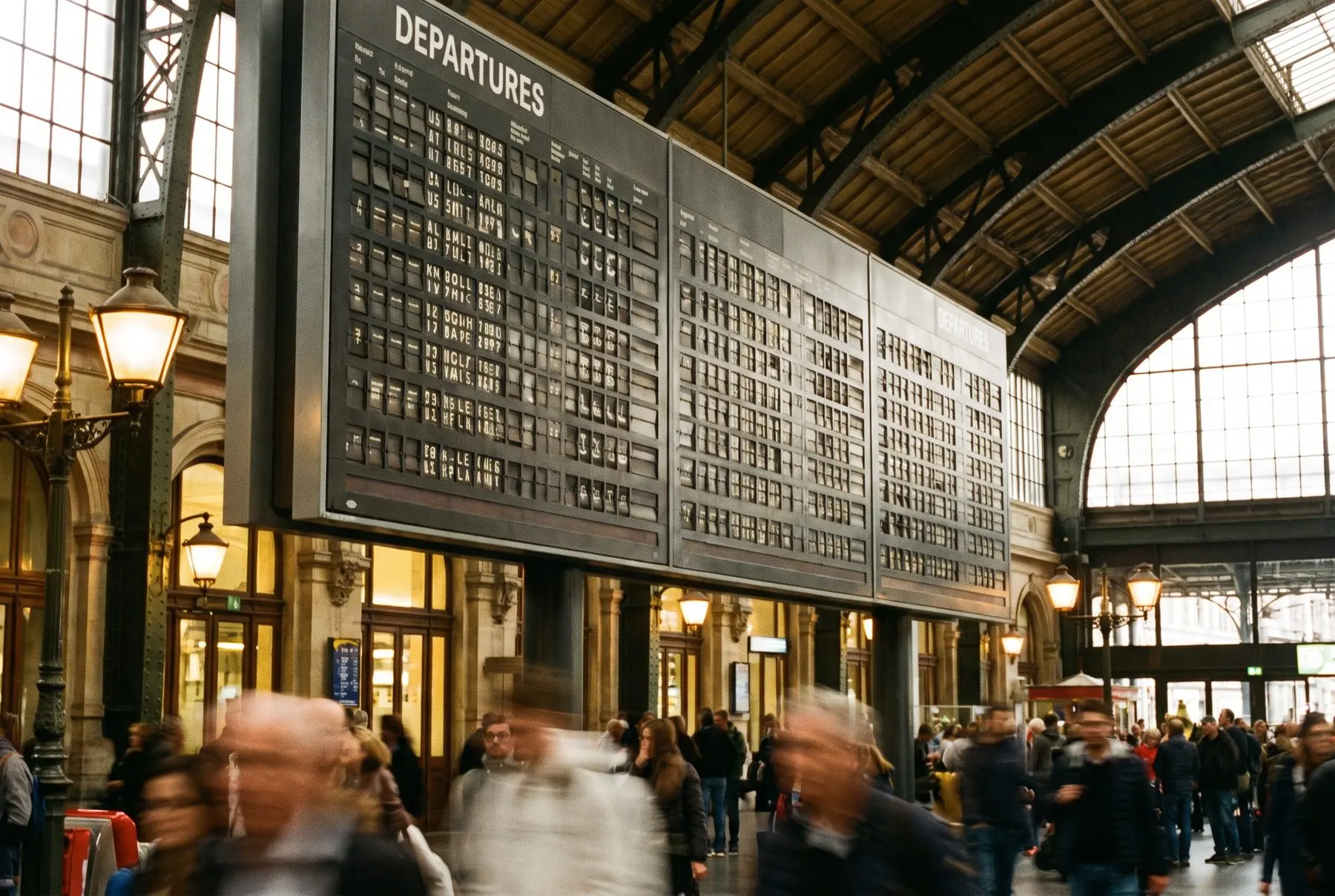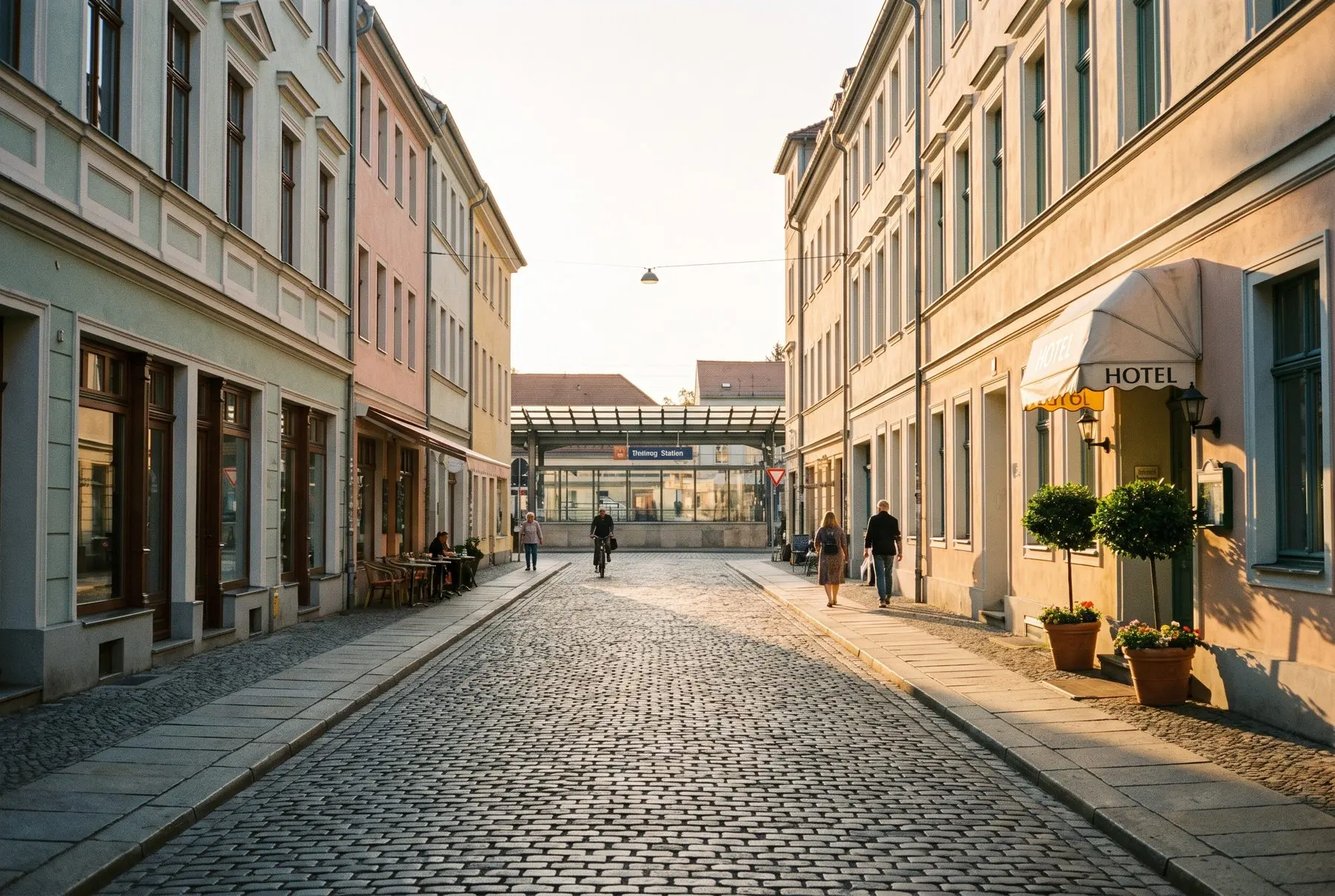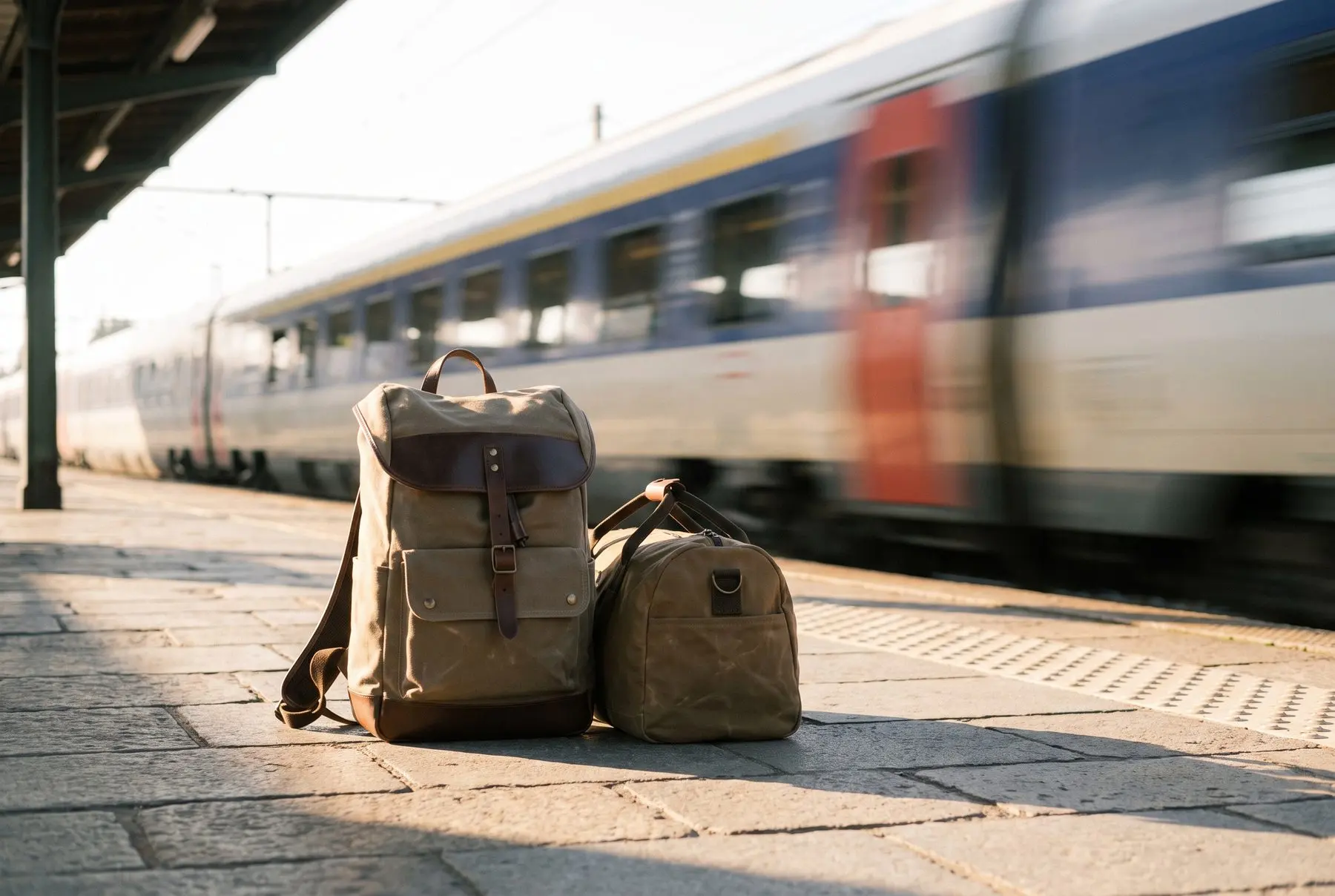
Planning a trip without a car is not the same as planning one with a car and simply subtracting the rental. It works better in reverse: figure out how you will get between places first, then choose where to sleep, and only then fill in what you will actually do there. Get that order right and the rest of the trip largely plans itself.
Start with the skeleton, not the sights
Before you look at a single museum or restaurant, sketch the transport skeleton of the trip: which cities or regions you'll visit, and in what order, based on how well they actually connect by train, bus or ferry — not on how they look on a map. Two places that seem close on a map can be a five-hour trip apart if the direct rail line was never built, while two places in different countries can be 90 minutes apart on a fast connection.
A quick way to test this: search the journey on a national rail planner or a pan-European one before you fall in love with an itinerary. If a leg keeps coming back as three connections and six hours, it's telling you something about how the trip should be reordered, not just how it should be booked.
- List cities in the order that connects most directly, then check the map fits your interests second.
- Treat backtracking as a cost — a loop route almost always beats zigzagging back and forth.
Pick bases, not a new bed every night
Without a car, every hotel change means packing, checking out, hauling luggage to a station and unpacking again — a real cost in time and energy that a driver barely notices. It is usually worth basing yourself in one well-connected town for three or four nights and doing day trips by train or bus, rather than changing beds daily to shave an hour off a single journey.
When picking a base, weigh the station location as heavily as the sights: a hotel five minutes from a hub station with frequent regional trains is often more useful than one closer to the main square but a long walk or taxi from transport.
Sequence the day around the last departure
A car-free day trip should be planned backwards from the last train, bus or ferry home, not forwards from breakfast. Find that last departure time first, decide how much buffer you want before it, and only then plan what fits in the hours available. This single habit prevents most "stranded in a small town" stories.
Weekend and holiday timetables often thin out sharply compared to weekdays, sometimes cutting the last service by hours. Always check the specific day of the week you are travelling, not a generic weekday timetable found earlier in your research.
Decide what to book ahead and what to leave loose
Not everything needs booking weeks out, but some things genuinely do: high-speed and long-distance trains with mandatory seat reservations, popular ferry crossings in peak season, sleeper cabins on night trains, and any leg on a route with only one or two services a day. Everything else — most regional and local trains, most buses — can usually be bought on the day.
A simple rule of thumb: if a leg has fewer than three services a day, or the mode is a known summer sell-out (island ferries, alpine sleeper trains), book it as soon as your dates are fixed. If it runs every 15–30 minutes all day, relax.
- Book: high-speed trains, night-train cabins, seasonal island ferries, and any once-a-day service.
- Leave loose: regional trains, city buses, trams, and anything running every 15–30 minutes.
Plan for luggage before you plan for sights
How much you pack shapes the whole trip more than most people expect. Stations with stairs and no lifts, cobbled old towns, and standing room only on a commuter train all get harder with a large suitcase. Decide your luggage strategy — one bag each, soft-sided, wheels optional — before booking accommodation, since it affects which stations and neighbourhoods are actually practical.
If your route includes a genuinely tough last mile — a hill town, an island with steps from the jetty — it is often easier to lighten the bag for that one leg than to redesign the whole trip around it. A duffel that compresses, or a day pack you can detach from a larger bag, solves this without buying new luggage.
Frequently asked questions
Is it hard to plan a trip without a car?
It takes a different order of decisions, not more effort. Plan transport links and a base first, then fill in activities — most of the difficulty people run into comes from planning it like a road trip and bolting on trains afterward.
How many days should I stay in each place?
Without a car, three to four nights per base is usually the sweet spot — long enough to justify the effort of arriving, short enough to keep momentum. One-night stops rarely make sense once you count the time lost to check-in, check-out and station transfers.
What should I book before I leave?
Anything with mandatory reservations (many high-speed and long-distance trains), anything that sells out in peak season (island ferries, night-train cabins), and anything running only once or twice a day. Regional trains and city buses can usually wait until you arrive.
What is the biggest mistake first-timers make?
Packing the itinerary as tightly as a road trip, with no slack between connections. Without a car to absorb delays, a missed transfer cascades into the rest of the day — building in buffer time is the single change that prevents the most stress.