Airlines trained us to worry about weight limits; car-free travel asks a different question — can you carry this yourself, one-handed, up two flights of stairs, for ten minutes, without putting it down? That single test matters more on a train trip than any kilogram allowance ever did, because there is no trunk to hide the extra bag in.
Choose the bag before you choose what goes in it
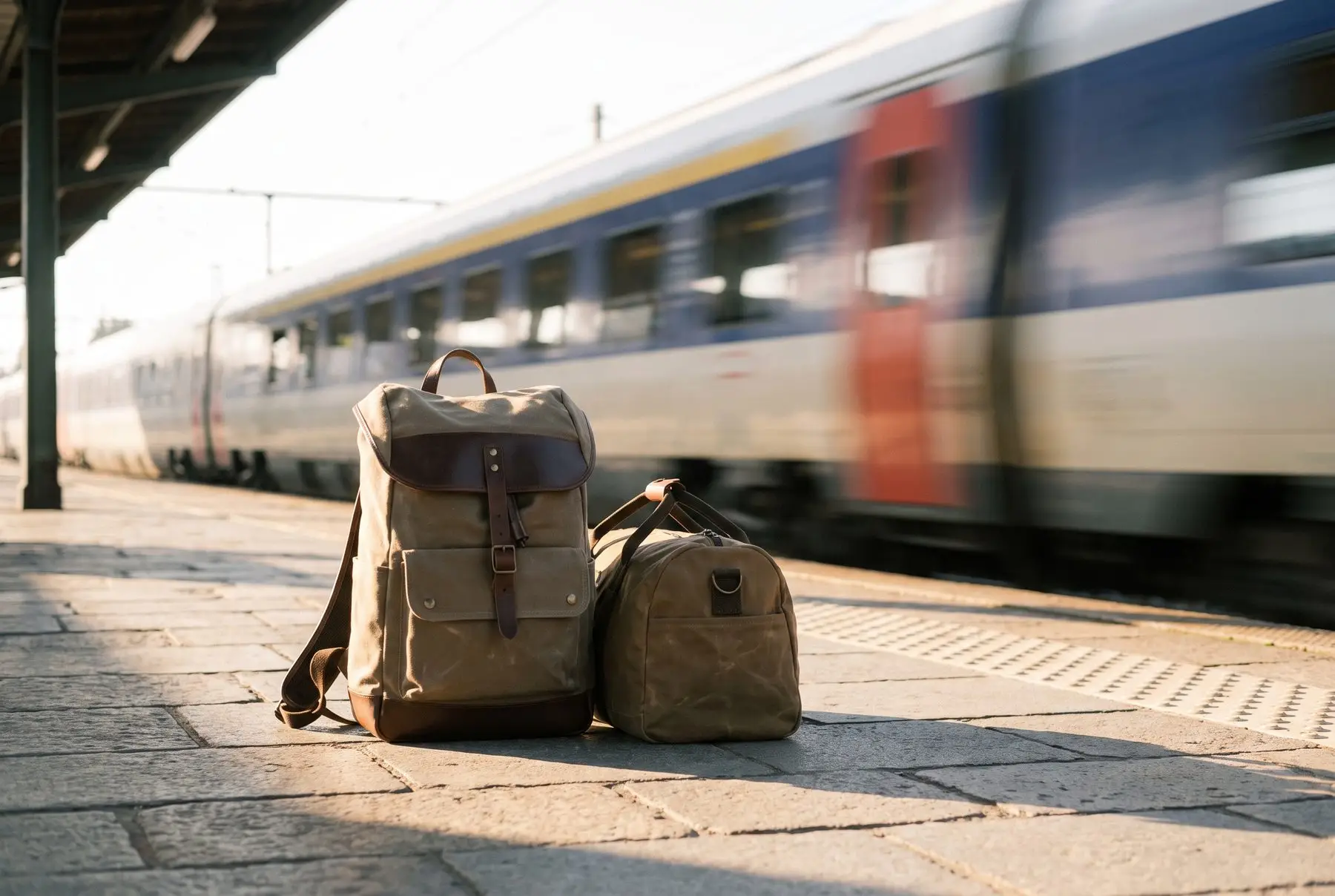
A wheeled suitcase is designed for flat, smooth airport floors — exactly the surface a train trip spends the least time on. Station stairs without escalators, cobbled squares, gravel platforms and narrow train vestibules all favor a bag you can lift and carry rather than roll. A backpack, a soft duffel with backpack straps, or a wheeled bag with a proper carry handle and stair-friendly wheels all outperform a standard hard-shell case here.
If you're set on wheels, look for one with a top handle sturdy enough to carry the full weight up a staircase and wheels large enough to survive cobblestones without jamming. Test it loaded, not empty, before you leave — an empty demo bag hides most of the problem.
One bag per person, no exceptions
A second bag doubles the number of things you can drop, forget, or need both hands for at exactly the moment a train door is closing. Consolidating into a single main bag plus one small daypack (worn, not carried) means you always have one hand free for a ticket, a handrail, or a child.
Couples and families often do better splitting essentials across bags rather than one giant shared case — if one bag gets delayed or left behind, nobody is left without a change of clothes entirely.
- Main bag: soft-sided or hybrid, carried on your back or by a sturdy top handle.
- Second bag: a small daypack worn on the front or back, not carried in hand, for documents and valuables.
A weight target that actually holds up
There's no universal rule, but a workable target for most adults is somewhere around 7–10 kg for the main bag — light enough to carry up two flights of stairs at a brisk pace without needing a break, heavy enough to still hold a real wardrobe for a week or two if you plan to do laundry along the way.
Weigh the packed bag on a bathroom scale before you leave home, the same way you would for a flight — the number is just as relevant here, even though no airline will ever check it.
Pack for the worst leg, not the average one
Most of a trip might involve rolling a bag smoothly from taxi to lobby, but plan around the worst single stretch — the hill town with no lift, the island with steps from the jetty, the connection with an eight-minute platform change and no elevator in sight. If that one leg works with your bag, everything easier also works.
If one leg is genuinely brutal and unavoidable, consider shipping a bag ahead to your next hotel (a common service in parts of Japan and increasingly elsewhere) or arranging a short taxi for that single transfer rather than compromising the whole trip's packing.
Frequently asked questions
What is the ideal bag for car-free train travel?
A soft-sided bag or backpack you can carry, not just roll, usually wins — stairs without escalators and cobbled streets are common on car-free trips, and a bag with real carrying handles or straps handles both far better than a hard-shell wheeled case.
How heavy should my luggage be for a train trip?
Around 7–10 kg per bag is a comfortable working target for most adults — light enough to carry up stairs at a normal pace, heavy enough for a real wardrobe if you plan to do laundry once or twice along the way.
Should I bring a wheeled suitcase or a backpack?
It depends on your route. If it's mostly flat stations and paved streets, a wheeled bag with sturdy wheels is fine. If it includes hill towns, islands with steps, or old cobbled centers, a backpack or carryable soft bag will save real effort.
How do I avoid overpacking?
Plan on doing laundry once or twice during a trip of a week or more rather than packing a fresh outfit for every day — most guesthouses and many stations near tourist areas offer a laundry service or self-service machines.