Interlaken to Lugano without a car
- Train
- Ferry
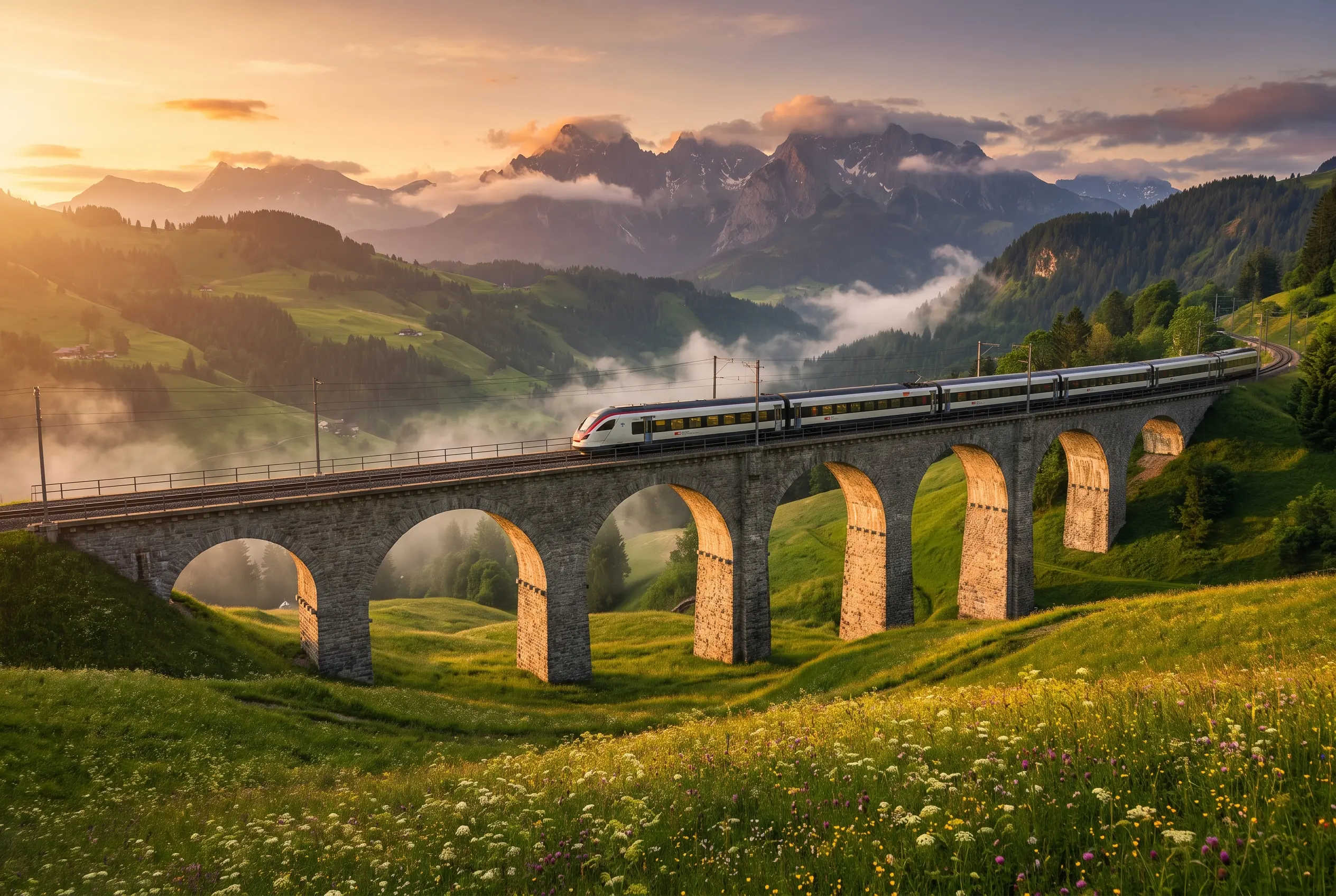
The link between the Bernese Oberland and the Swiss side of the Alps south of the mountains is, unusually, part of the journey's appeal: a scenic train to Lucerne, a slow boat across the lake, and a panoramic train over the historic Gotthard pass line make the six-and-a-half-hour trip feel more like a mini grand tour than a transfer. It only runs in the warmer months, so plan around the season.
Route facts
| By train | By car | |
|---|---|---|
| Distance | 195 km | 210 km |
| Journey time | ~6h 40m | ~2h 45m |
| CO₂ per passenger | ≈ 7 kg | ≈ 36 kg |
| Typical fare | from €46 | — |
| Departures per day | ≈ 1 | — |
| Operators | SBB · Lake Lucerne Navigation Company | |
Train or car?
The car is faster on the clock, about 2h45 versus 6h40 for the boat-and-train combo, but that's beside the point: the Gotthard Panorama Express is the destination, not just a way to get from A to B, and it runs only in the warmer months.
The train saves about 29 kg of CO₂ per passenger.
Distances and CO₂ are estimates, for comparison only.
The journey, leg by leg
- Interlaken Ost Luzern
- Luzern Flüelen
- Flüelen Lugano
The journey, leg by leg
It starts on solid ground: the Luzern–Interlaken Express panoramic train covers Interlaken Ost to Lucerne in about 110 minutes, already one of Switzerland's classic scenic rides. In Lucerne, you step off the train and onto a lake boat for the heart of the trip — a roughly two-and-a-half to three-hour cruise across Lake Lucerne to Flüelen, gateway to the mountains.
From Flüelen, the panoramic train takes over again, climbing the historic Gotthard mountain route via Bellinzona — the old line, not the fast base tunnel, chosen specifically for the views — before dropping into Lugano roughly two hours later.
Tickets & when to book
The Gotthard Panorama Express requires a seat reservation on top of your regular ticket — book this a few days ahead in peak summer, since the boat and the panoramic carriages both have limited capacity. A Swiss Travel Pass covers the train and boat legs; you only pay the supplement for the reserved seat.
Without a pass, expect to pay around 46€ for the seat reservation on top of a standard second-class Interlaken–Lugano fare. Buy tickets via the SBB app or at any station counter — no need to book weeks out unless you want a specific departure.
Seasonal notes
The boat-and-panoramic-train combination runs only from roughly April to October, weather and lake conditions permitting — this is a fair-weather, tourist-season service, not a year-round commuter line. Outside that window, or if you're simply in a hurry, the fast route via the Gotthard Base Tunnel covers Zurich to Lugano in about two hours, cutting the whole Interlaken–Lugano trip to roughly three and a half hours by regular InterCity trains.
Even within the season, the paddle-steamer sailings (as opposed to the faster motor vessels) run a more limited timetable — check which boat type is on your chosen departure if you specifically want the vintage steamer experience.
Doing it car-free at each end
Interlaken Ost station connects straight to the funiculars and cogwheel trains that reach Jungfraujoch, Grindelwald and Lauterbrunnen, so most visitors never need a car in the region — the town itself is small enough to cross on foot in fifteen minutes.
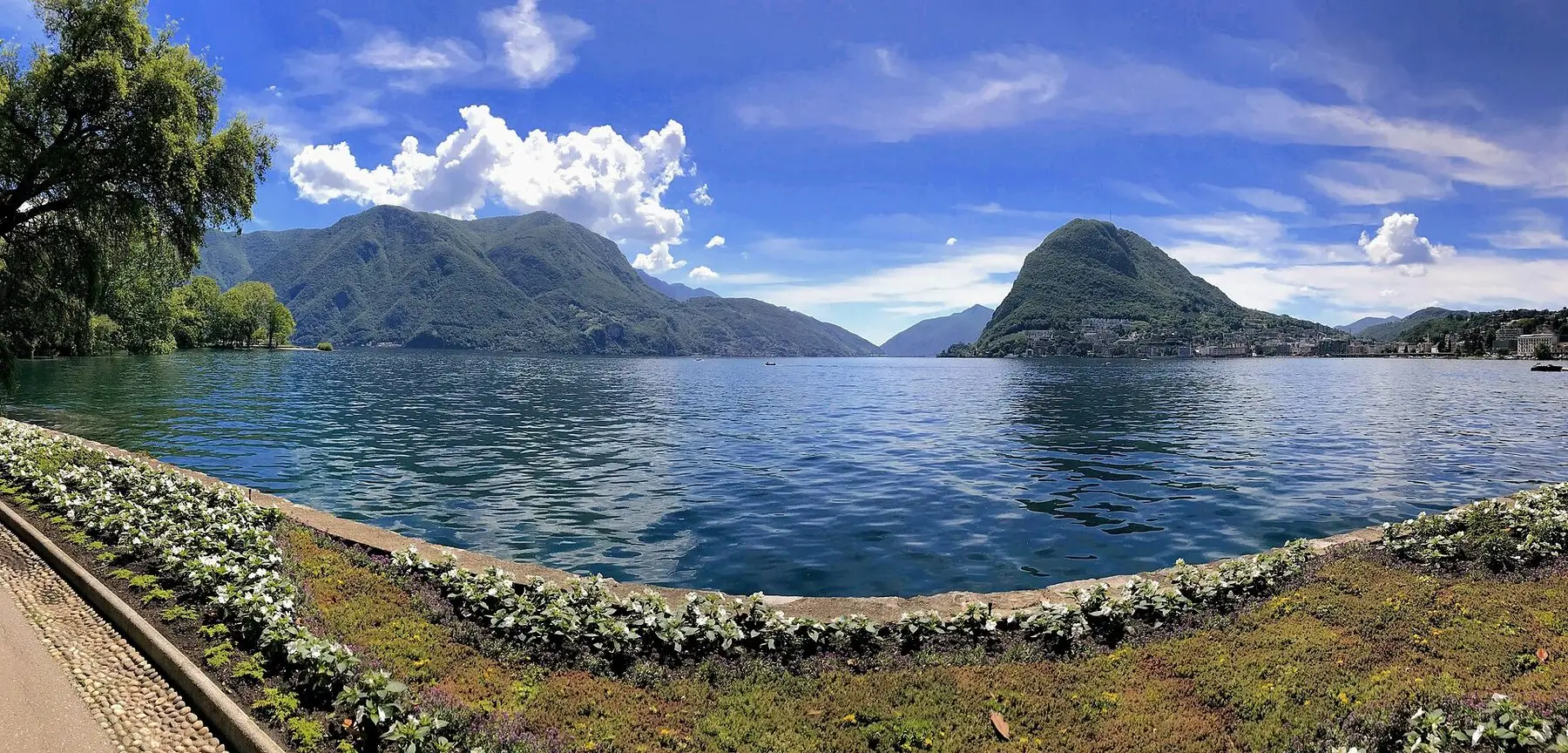
Lugano's station sits on a hillside above the lake, linked to the centre by a short funicular that's included in your train ticket. From the lakefront, buses and the funicular to Monte San Salvatore cover everything else — the whole southern tip of Switzerland is comfortably walkable and transit-friendly.
Before you use public Wi-Fi on the way
Wi-Fi on trains, ferries, in stations and in cafés is a network shared with other people. A VPN encrypts the connection between your device and the VPN server, one extra layer when you check email or log in to accounts on the move. NordVPN is one option.
See NordVPNFrequently asked questions
What is the Gotthard Panorama Express?
It's a combined boat-and-train experience linking Lucerne to Lugano: a scenic cruise across Lake Lucerne followed by a panoramic train over the historic Gotthard mountain pass, instead of the fast modern base tunnel.
Does the boat and train route run all year?
No — it runs roughly April to October. Outside that season, the fast route via the Gotthard Base Tunnel connects the same cities in around three and a half hours by regular train.
How much does it cost from Interlaken to Lugano?
Budget around 46€ for the mandatory seat reservation on top of a standard second-class fare. Swiss Travel Pass holders pay only the reservation supplement.
Is there a faster way if I skip the boat?
Yes. Regular InterCity trains via Zurich and the Gotthard Base Tunnel cover Interlaken to Lugano in roughly three and a half hours — about half the time, but without the lake cruise or the old mountain line.
- from
- Interlaken
- To
- Lugano
- Duration
- ~6h 40m
- Typical fare
- €46
- Frequency
- 1–2 departures daily, April–October
- How you travel
- Train
- Ferry