Munich to Venice without a car
- Train
- Bus
Munich and Venice are linked by one of the great Alpine train rides in Europe: a route that climbs from Bavaria through Tyrol, crosses the Brenner Pass into Italy, and descends onto the Venetian plain, arriving right at the edge of the lagoon roughly seven hours later. It takes longer than flying, but there is no airport transfer at either end — the train delivers you straight onto Venice’s Grand Canal, where a car would be useless anyway.
Route facts
| By train | By car | |
|---|---|---|
| Distance | 560 km | 580 km |
| Journey time | ~7h | ~6h |
| CO₂ per passenger | ≈ 20 kg | ≈ 99 kg |
| Typical fare | from €39 | — |
| Departures per day | ≈ 4 | — |
| Operators | ÖBB · Trenitalia | |
Train or car?
The train is the only sensible choice at the Venice end: the city has no roads into its historic centre, so driving just gets you to a parking garage on the mainland, while the train rolls straight into Santa Lucia station on the water.
The train saves about 79 kg of CO₂ per passenger.
Distances and CO₂ are estimates, for comparison only.
The journey, leg by leg
- München Hauptbahnhof Innsbruck Hauptbahnhof
- Innsbruck Hauptbahnhof Verona Porta Nuova
- Verona Porta Nuova Venezia Santa Lucia
The journey, leg by leg
The trip breaks naturally into three stages: a EuroCity train from München Hauptbahnhof to Innsbruck in under two hours, the dramatic climb over the Brenner Pass into Italy continuing on to Verona in around four hours, and a final short hop from Verona to Venezia Santa Lucia. Depending on the day and current works on the line, this may run as a single through-train or require one change, usually at Verona.
The middle stretch, over the Brenner, is the reason to take the train at all: forested valleys give way to the peaks of the Dolomites and South Tyrol before the line drops down toward the Italian lowlands.
Tickets & when to book
Deutsche Bahn Sparpreis and Trenitalia advance fares both apply on different legs of this trip, and booking a few weeks ahead brings the total down to around 39–55€, against 90€ or more for tickets bought close to departure. Because this involves several operators, it’s often simplest to book each leg separately rather than search for a single through-fare.
Ongoing modernisation of the Brenner line (part of a project expected to run into the early 2030s) occasionally means a bus replaces a section of track, so it’s worth checking the current status shortly before you travel rather than assuming an all-rail journey.
Best stops en route
Innsbruck, roughly two hours in, is an easy overnight stop with the Alps rising right behind the old town — worth a night if you'd rather split the trip than do it in one long day.
Verona, near the end of the line, rewards a stopover with its Roman arena and the balcony associated with Romeo and Juliet, and breaks up what would otherwise be a very long final push to Venice.
Arriving car-free at each end
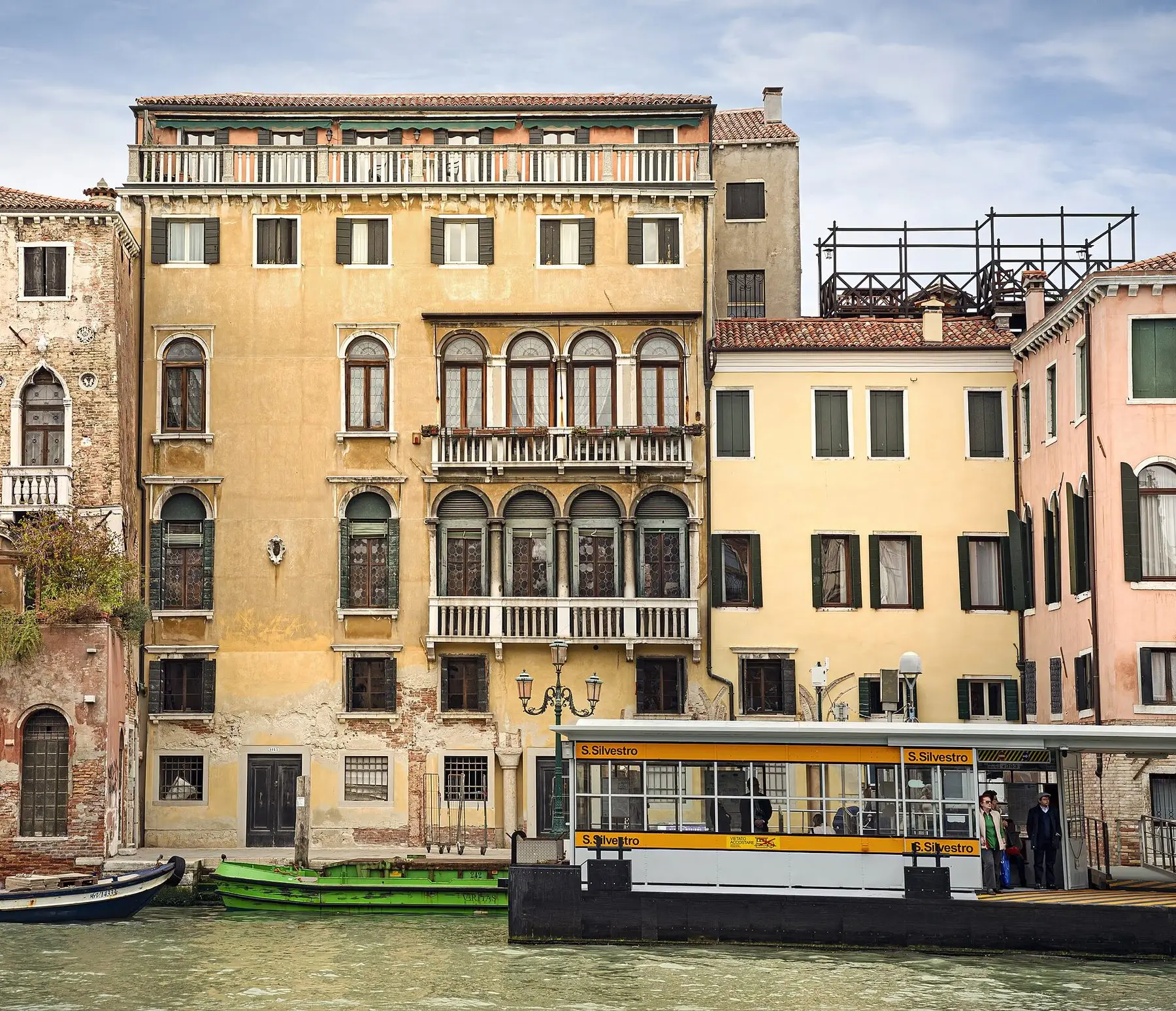
München Hauptbahnhof sits in the centre with U-Bahn, S-Bahn and trams underneath it, so most of the city is minutes away. Venezia Santa Lucia is even more dramatic: step outside and you're on the Grand Canal, with vaporetti (water buses) and your own two feet the only ways to continue.
Neither city has any real use for a car: Munich's transit network reaches every corner of the metropolitan area, and Venice's historic centre bans cars outright — everyone, residents included, gets around on foot or by boat.
Before you use public Wi-Fi on the way
Wi-Fi on trains, ferries, in stations and in cafés is a network shared with other people. A VPN encrypts the connection between your device and the VPN server, one extra layer when you check email or log in to accounts on the move. NordVPN is one option.
See NordVPNFrequently asked questions
Is there a direct train from Munich to Venice?
Sometimes — a EuroCity service covers most of the route, but many journeys involve one change, typically at Verona or occasionally Innsbruck. Either way, the whole trip takes about seven hours over the Brenner Pass.
How much does the Munich–Venice train cost?
Booking a few weeks ahead across Deutsche Bahn and Trenitalia advance fares typically brings the total to around 39–55€ one way; tickets bought close to departure can cost 90€ or more.
Is a bus really part of this route?
Not always, but sometimes — engineering works on the Brenner line, part of a long modernisation project, occasionally require a bus to cover part of the Innsbruck–Verona section. Check the operator’s site shortly before you travel.
Can you do Munich to Venice entirely without a car?
Yes, and Venice makes it easy: cars are banned from the historic centre outright, so the train hands you straight over to vaporetti and walking. Munich's transit network handles the other end just as well.
- from
- Munich
- To
- Venice
- Duration
- ~7h
- Typical fare
- €39
- Frequency
- A few daily connections, one or two changes
- How you travel
- Train
- Bus