Cinque Terre
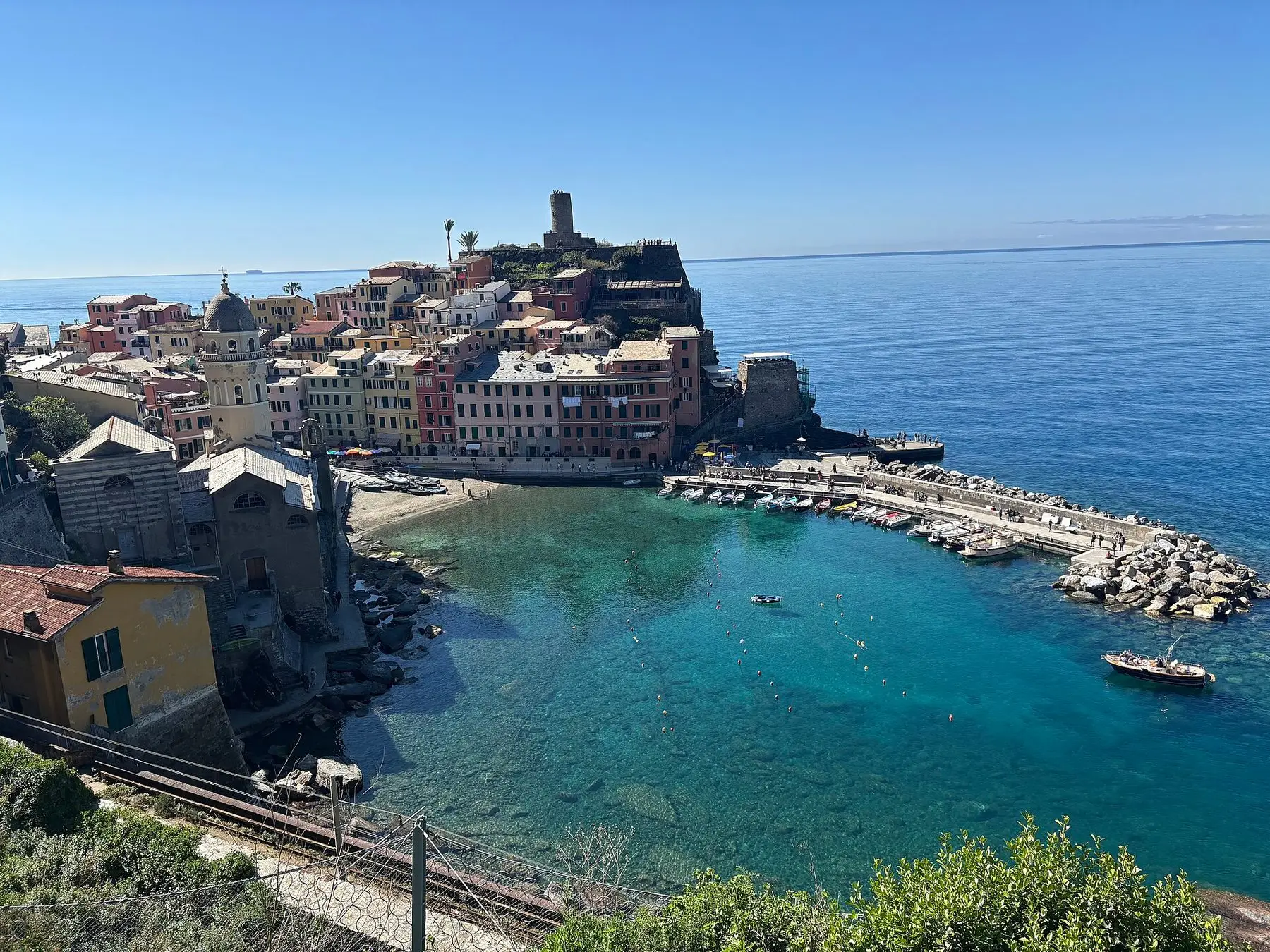
Five villages, one coastal railway and a web of ancient trails — the Italian Riviera was made for travelling without a car.
- Train
- Ferry
- Walk
Cinque Terre is one of the easiest places in Italy to visit without a car — driving here is more hassle than help. Five cliff-hugging villages sit on a single regional railway, linked by seasonal ferries and centuries-old footpaths, so the whole coast opens up with a paper ticket and a decent pair of shoes.
Why it works without a car
- All five villages sit on the Cinque Terre Express regional line — end to end in under 25 minutes.
- Seasonal ferries link four of the five villages for the finest views of the coast.
- The coastal Blue Trail and higher sanctuary paths connect the villages on foot — no transfer needed.
- Cars are banned or useless inside the villages — arriving by car means parking far above and walking down anyway.
How to arrive
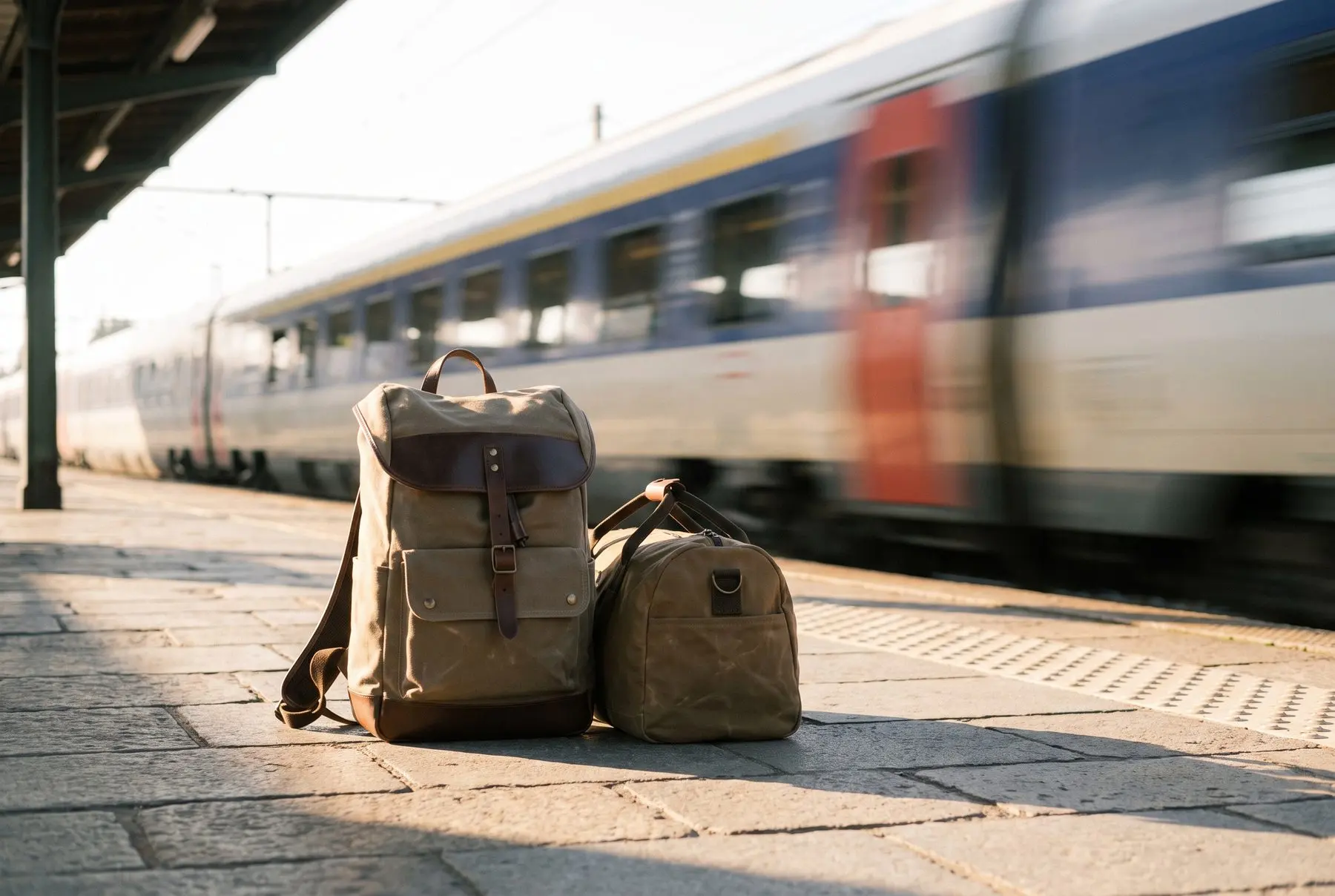
The gateways are La Spezia Centrale to the south and Levanto to the north. From either, the Cinque Terre Express regional train threads all five villages, running every 15–30 minutes for most of the day.
Fast trains from across Italy stop at La Spezia; simply change there for the local line. You never need a car to reach the coast.
- From Milan — about 3h via Genoa or La Spezia.
- From Florence — about 2h30 via Pisa or La Spezia.
- From Pisa — about 1h to La Spezia, then the local train.
- From Genoa — about 1h30 on direct regional trains to Monterosso.
Getting around
The Express hops between villages in 4–8 minutes each, so you can base yourself anywhere and roam freely. From roughly March to October, ferries add a slower, sea-level way to travel — every village except Corniglia has a jetty.
On foot, the coastal Sentiero Azzurro (Blue Trail) and the higher sanctuary paths link the villages directly. Trail sections open and close with weather and maintenance, so check the status the day you go.
Last-mile gaps
Corniglia is the one catch: it sits on a headland with no ferry stop, reached by 382 steps (the Lardarina) or a short shuttle bus from its station. It's manageable, but plan for it.
The panoramic sanctuaries above each village are steep uphill walks with no lift. Factor the climb into your day rather than expecting a ride.
Travelling with luggage
Villages are stacked vertically, with stairs, narrow lanes and few lifts. A wheeled suitcase is a real workout here — pack as light as you can.
If you carry more, Monterosso al Mare is the flattest and easiest to reach with bags, and its station sits close to the seafront hotels.
Tickets & the Cinque Terre Card
The Cinque Terre Card comes in two forms: a Trekking card (trail access) and a Train card (unlimited Cinque Terre Express plus trails). If you hop the train several times a day, the Train card usually pays for itself.
Buy it at any village station or online. Single regional tickets also work if you travel slowly and walk most of the time.
Where to stay
Before you use public Wi-Fi on the way
Wi-Fi on trains, ferries, in stations and in cafés is a network shared with other people. A VPN encrypts the connection between your device and the VPN server, one extra layer when you check email or log in to accounts on the move. NordVPN is one option.
See NordVPNFrequently asked questions
Can you visit Cinque Terre without a car?
Yes — it's one of the best car-free destinations in Italy. All five villages are on the Cinque Terre Express train, linked by seasonal ferries and walking trails, and cars are banned or impractical inside the villages anyway.
Which Cinque Terre village is best without a car?
Monterosso al Mare is the easiest: it is the flattest, has the only sizeable beach, and its station is close to the hotels. Vernazza is the most beautiful but steep; Levanto and La Spezia are cheaper bases a few minutes away by train.
How do you get between the Cinque Terre villages?
The Cinque Terre Express regional train links all five in a few minutes each, every 15–30 minutes for most of the day. From spring to autumn, ferries connect every village except Corniglia, and the coastal trails join them on foot.
Is Cinque Terre difficult with luggage?
It can be. The villages are full of stairs and narrow lanes, and Corniglia has 382 steps from its station. Pack light, choose Monterosso if you can, and use the station shuttle in Corniglia.
Do I need the Cinque Terre Card?
If you plan to ride the Express several times a day or walk the paid trail sections, the Train version usually saves money. For a slow, mostly-walking visit, single tickets are fine.
- Country
- Italy
- Region
- Liguria
- How you travel
- Train
- Ferry
- Walk
Keep exploring