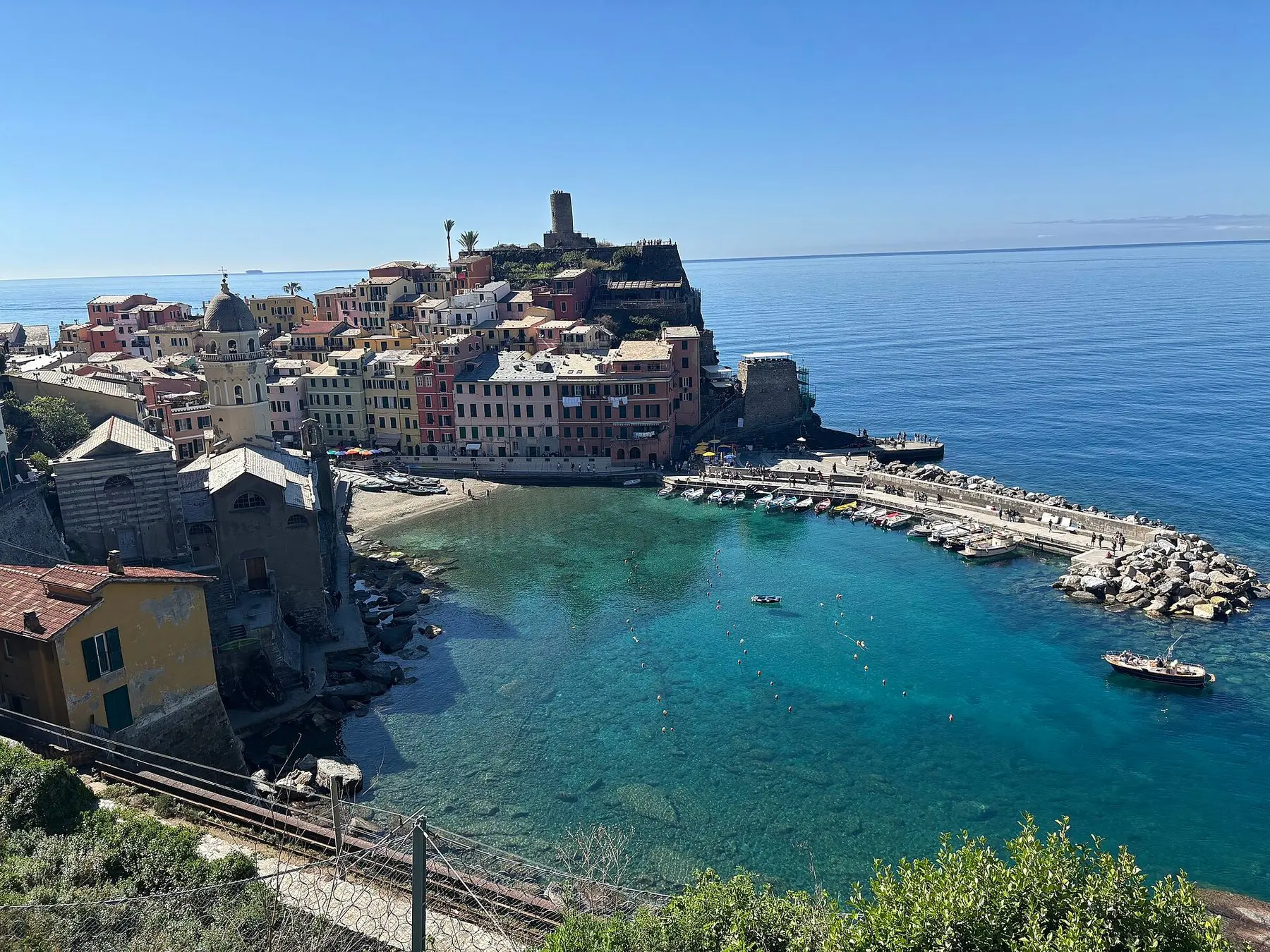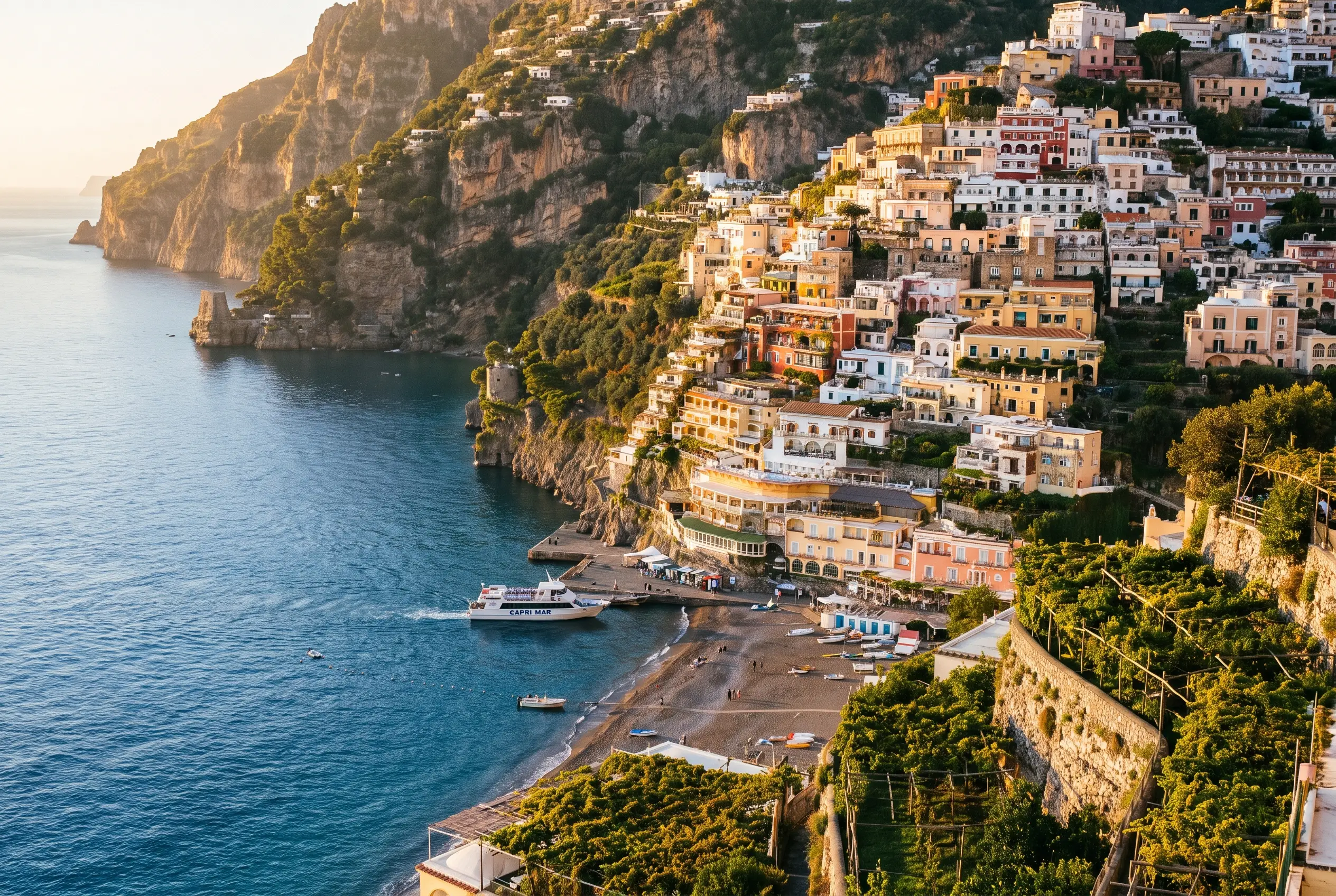
The Amalfi Coast is one of the rare places where the case against renting a car makes itself: the SS163 coast road is a single narrow lane in most stretches, shared with tour coaches, delivery vans and scooters, and parking in Positano or Amalfi can cost more than the hotel room. SITA Sud buses and seasonal ferries cover the same ground with none of the stress, connecting to the rail network at Salerno and Sorrento.
Getting to the coast: trains to Salerno and Sorrento
The coast has no train line of its own, so the approach runs through one of two gateway towns. Salerno sits on the main Trenitalia and Italo high-speed network, reachable from Naples in around 35–45 minutes and from Rome in about 2h30, and connects onward to the coast by bus or ferry.
Sorrento is served instead by the Circumvesuviana, a slower, privately-run commuter line from Naples that also stops near Pompeii, taking around an hour. It's a rougher ride than the mainline trains — keep valuables close and expect standing room at peak times — but it lands you within walking distance of Sorrento's ferry dock and bus terminal.
SITA Sud buses along the coast road
SITA Sud runs the public bus network along the SS163, with frequent departures connecting Sorrento, Positano, Amalfi, Ravello (via Amalfi) and Salerno, more or less year-round. Buses can fill up fast in July and August, so arrive at the stop with time to spare and expect to stand for at least part of a busy midday run.
Tickets are not sold on board — buy them beforehand from a tabaccheria (tobacco shop, marked by a black-and-white T sign), a newsstand, or a ticket machine, and validate them in the small stamping machine when you board. A ticket typically covers a set time window rather than a single ride, so it's worth checking whether a day pass suits a hop-heavy itinerary.
Ferries between Positano, Amalfi and Salerno
From roughly April to October, passenger ferries and hydrofoils connect Salerno, Amalfi, Positano and Sorrento, with some routes extending to Capri. They tend to be faster than the bus at peak times, skip the road traffic entirely, and offer a view of the cliffside towns that the coast road simply cannot match.
The trade-off is that service is seasonal and weather-dependent — rough seas cancel sailings with little notice, and the schedule thins out sharply outside summer, sometimes stopping altogether in winter. Treat the ferry as the scenic, fair-weather option and keep the bus as the year-round backup.
Why not to drive the coast road
The SS163 Amalfitana was carved into the cliffside long before modern tourist traffic existed, and it shows: much of it is one lane wide, with tour coaches, delivery vans, scooters and rental cars all negotiating the same blind hairpin bends. Summer afternoons regularly produce standstill traffic through Positano and Amalfi, sometimes for well over an hour.
Parking compounds the problem: most towns have little to no street parking, pushing drivers into multi-storey garages that charge premium rates for the privilege, often more per night than a hotel room. Some summers have also seen local authorities trial odd/even license-plate restrictions on the coast road at peak hours — a sign of how serious congestion has become, and one more reason to leave the car out of the plan.
Where to base yourself
Sorrento, just outside the coast proper, is the easiest base for a first visit: it has the best train and bus connections, a wider range of hotel prices, and puts every coastal town within a manageable bus or ferry ride. Salerno works similarly on the eastern end, usually cheaper still and equally well connected by rail.
Staying inside Positano or Amalfi puts you in the postcard view but means steep steps, higher prices and heavier day-tripper crowds at midday; quieter towns like Praiano, Minori or Maiori sit on the same bus and ferry lines for a calmer, more affordable stay a short ride from the busier centers.
Frequently asked questions
Can you visit the Amalfi Coast without a car?
Yes, and most seasoned visitors would say it is the easier way to do it. SITA Sud buses run the length of the coast road year-round, seasonal ferries add a faster and more scenic option from spring to autumn, and both connect to the rail network at Salerno and Sorrento.
Is it a bad idea to rent a car for the Amalfi Coast?
For most travelers, yes. The SS163 is narrow, congested in summer and stressful even for confident drivers, and parking in the main towns is scarce and expensive. A rental makes more sense for exploring inland Campania beyond the coast itself, not for hopping between Positano, Amalfi and Ravello.
How do you get from Naples airport to the Amalfi Coast without a car?
A taxi or shuttle bus to Naples Centrale connects to trains toward Salerno, or to the Circumvesuviana toward Sorrento; private shuttle operators also run direct buses from the airport to Sorrento for travelers who would rather skip the transfer. Either way, budget an extra hour or so beyond the direct driving time for connections.
SITA bus or ferry — which is better?
The ferry wins on views and often on speed between coastal towns, but it only runs roughly April to October and can be cancelled by rough seas with little warning. The bus runs year-round regardless of weather and reaches a couple of hillside spots, like Ravello, that boats cannot — most visitors end up using both.
Should I book tickets in advance in summer?
Ferry tickets are worth booking a day or two ahead in July and August, when popular sailings can sell out. SITA Sud bus tickets are bought as needed from tabacchi rather than reserved in advance, but arriving at the stop early is its own kind of booking when buses are running full.