Giethoorn
The Dutch village with no roads at all — canals instead of streets, footbridges instead of crossings, and whisper-quiet electric boats for traffic.
- Bus
- Ferry
- Bike
- Walk
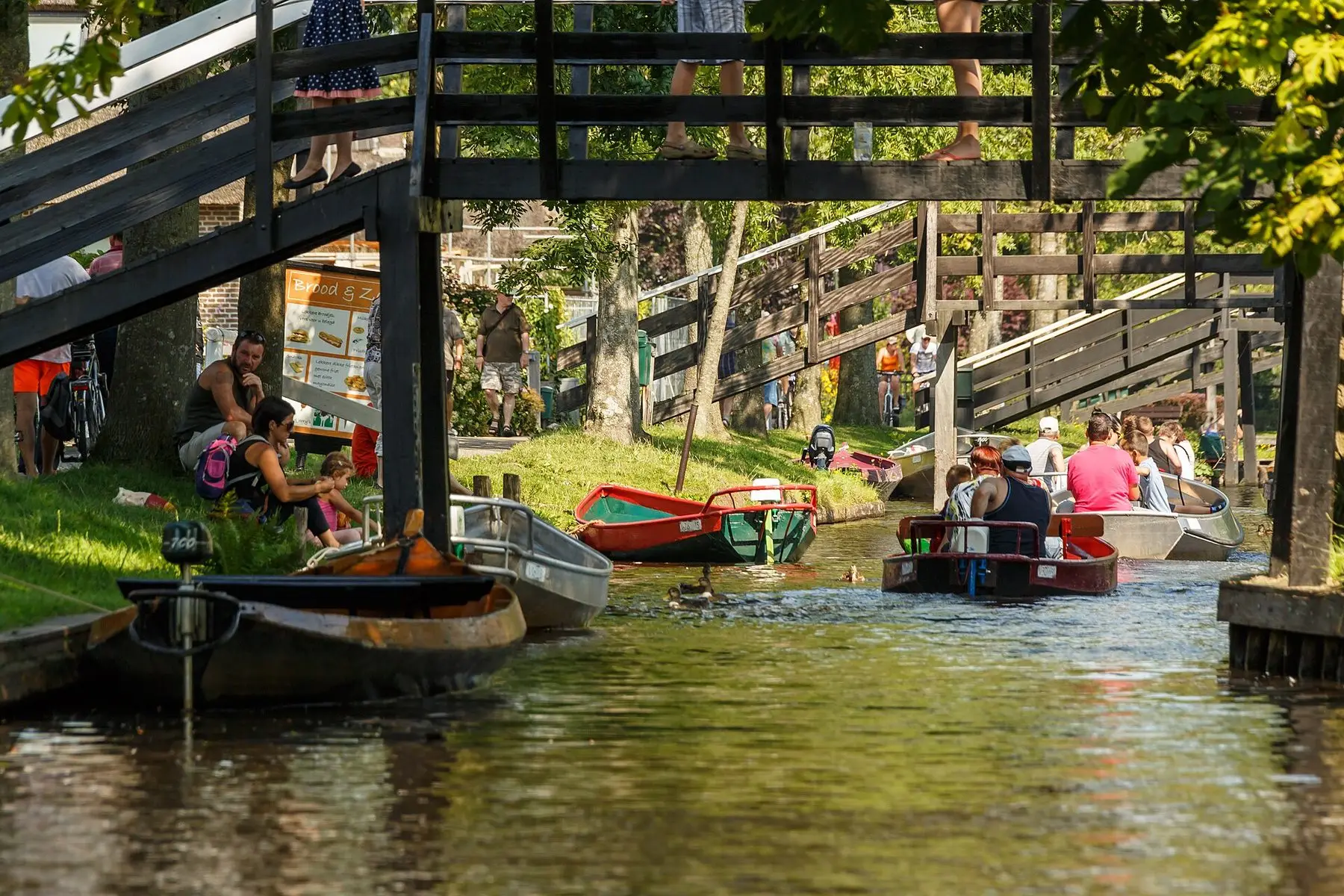
No, cars cannot follow you into old Giethoorn — the historic core, known locally as the Binnenpad area, was built entirely around water, with canals doing the job that streets do everywhere else. Peat diggers cut the channels centuries ago and never got around to adding roads, so a hundred small footbridges and a small fleet of electric whisper boats (fluisterboten) still carry everyone and everything through the village.
Why it works without a car
- No roads reach the old village core at all — footbridges and canals are the only way in on land or water.
- Electric whisper boats (fluisterboten) — silent, no licence needed for the small rental ones — are the local equivalent of a car.
- A regional bus runs straight from Steenwijk train station to the village, so the whole trip needs zero driving.
- The surrounding polder is flat and criss-crossed with bike paths, so cycling covers the wider area effortlessly.
How to arrive
Steenwijk is the nearest train station, on the line between Zwolle and Leeuwarden, with regular regional trains from Amsterdam requiring one change. From the station forecourt, a local bus (route 70) runs into Giethoorn in about 20 minutes.
The bus drops you at Giethoorn's bus stops on the edge of the village, from where the canal-side paths and footbridges take over. Nothing about the approach requires a rental car.
- From Amsterdam — about 1h45 to 2h by train to Steenwijk, then the bus.
- From Zwolle — about 30 minutes by regional train to Steenwijk.
- In summer, seasonal direct buses and boat-tour combinations run from Amsterdam on some days — check current schedules before you go.
Getting around
On foot, the Binnenpad footpath threads the length of the old village along the canal, crossing dozens of arched wooden bridges — it's a flat, easy walk end to end in well under an hour.
On the water, rental whisper boats (electric, silent, no boating licence required for the small ones) are how most visitors explore — gliding past thatched farmhouses at not much more than walking pace. Punted rowing boats and short guided tours are also common.
Bikes cover the wider polder around the village and connect Giethoorn to neighbouring hamlets and the De Wieden nature reserve, on flat, well-marked paths.
Last-mile gaps
A handful of newer guesthouses and farms sit on the outer edges of the village or in the surrounding polder, reachable by road for delivery vans and staff but not really meant for visitor cars. If yours is one of them, confirm with your host how the footpath or bike route connects to your door.
The old core has no street lighting in the way a normal village would — bring a torch or your phone light for evening walks along the footbridges outside the lit main stretch.
Travelling with luggage
Giethoorn is one of the easier car-free villages with bags — it's flat, the footbridges have gentle ramps rather than steep steps, and a wheeled suitcase rolls fairly well along the Binnenpad.
Many guesthouses will collect guests and bags by boat from a drop-off point if you arrange it in advance — worth asking, especially if your stay is deep in the canal network away from the bus stop.
Where to stay
Before you use public Wi-Fi on the way
Wi-Fi on trains, ferries, in stations and in cafés is a network shared with other people. A VPN encrypts the connection between your device and the VPN server, one extra layer when you check email or log in to accounts on the move. NordVPN is one option.
See NordVPNFrequently asked questions
Are cars allowed in Giethoorn?
No — not in the old village core. The historic part of Giethoorn, around the Binnenpad, was built without any roads at all, only canals and footbridges, so cars simply cannot reach most houses. Newer parts of the wider village do have normal streets and parking.
Why is Giethoorn called the village with no roads?
Because peat cutters who founded the village in the 13th century dug canals to move turf and never built roads alongside them. The waterways became the main routes through the village, and the old core still has no streets for cars today — only water and footpaths.
How do you get to Giethoorn without a car?
By train to Steenwijk, changing from Amsterdam, Zwolle or Leeuwarden, then a local bus that takes about 20 minutes into the village. Some summer weekends add direct buses or boat-tour packages from Amsterdam.
How do you get around Giethoorn without a car?
On foot along the Binnenpad footpath, by rental electric whisper boat on the canals, or by bike on the flat paths through the surrounding polder. All three are how locals get around too — the boats are effectively the village traffic.
Can you take luggage to Giethoorn easily?
Yes, more easily than most car-free destinations — the village is flat and the footbridges have gentle slopes rather than steps, so a wheeled suitcase copes fine. Some guesthouses will also collect bags by boat if you ask ahead.
- Country
- Netherlands
- Region
- Overijssel
- How you travel
- Bus
- Ferry
- Bike
- Walk
Keep exploring