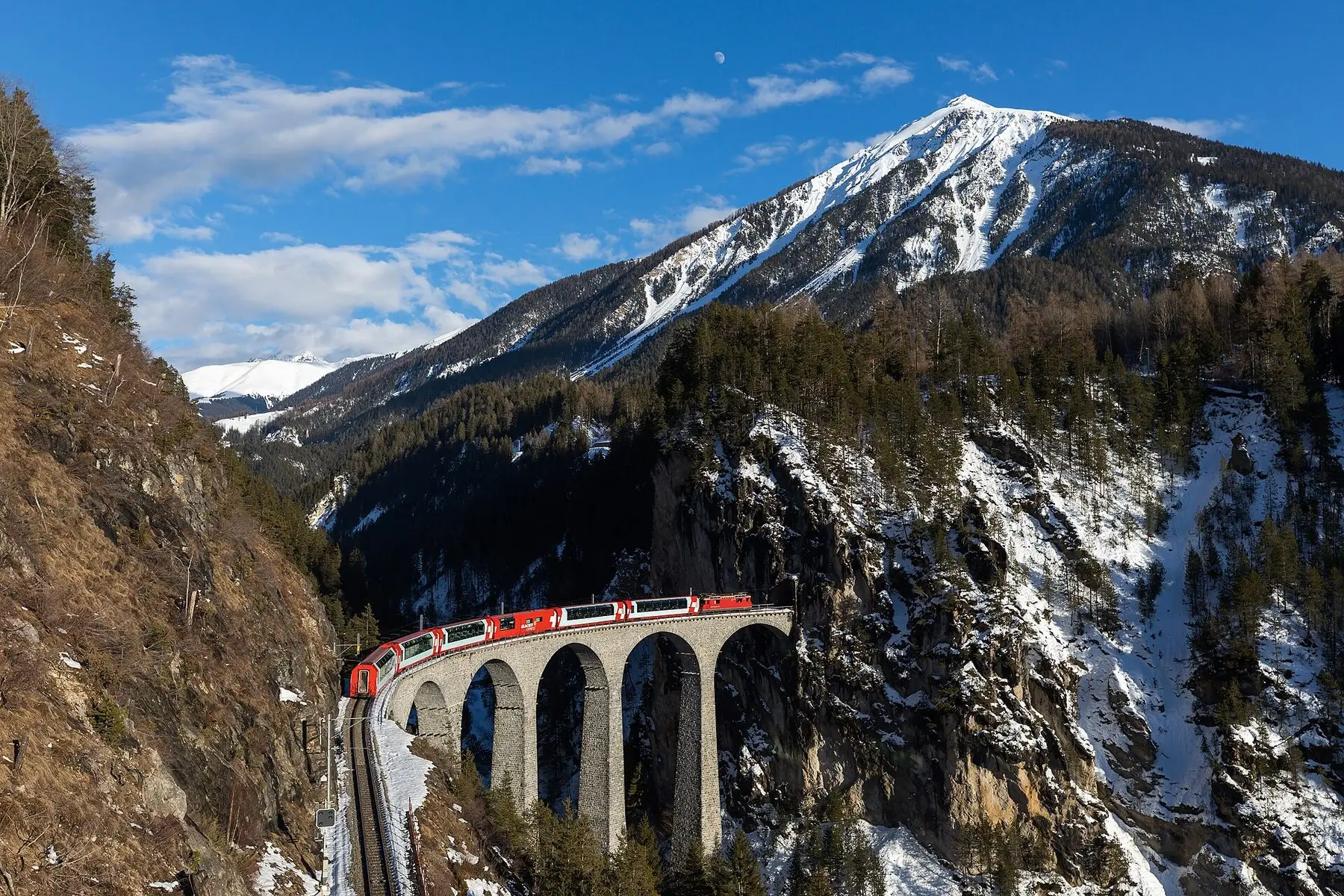
This week-long route strings together two of the Alps' most rewarding car-free corners: the Austrian Tyrol and Carinthia, and the Julian Alps of Slovenia. Regional trains carry you between the cities, a seasonal postbus crosses one of the highest paved roads in Europe, and easy trails do the rest — no rental desk, no mountain pass to navigate yourself.
The route at a glance
InnsbruckAustria
Zell am SeeAustria
GrossglocknerHigh Alpine Road
VillachAustria
Lake BledSlovenia
The itinerary, day by day
Day 1
Arrival in Innsbruck
Roll into Innsbruck by direct train from Munich, Zurich or Vienna — the ÖBB Railjet network reaches right into the Tyrolean capital, so flying is optional. Spend the afternoon in the compact Altstadt beneath the Nordkette ridge, finishing at the Golden Roof and the banks of the Inn.
Train
Walk
Day 2
Innsbruck and the Nordkette
A funicular and cable car climb straight from the city center to over 2,300 m on the Nordkette ridge, putting genuine high-alpine views within a morning and no car in sight. Spend the rest of the day among the Hofburg gardens and the riverside promenades below.
Walk
Day 3
Into the Salzburg Alps: Zell am See
A regional train follows the Salzach valley from Innsbruck toward Zell am See, with an easy change around Wörgl and a ride of roughly three hours in total. Settle in beside the turquoise Zeller See and walk the lakeside promenade as the Kitzsteinhorn glacier catches the evening light.
Train
Walk
Day 4
Crossing the Grossglockner High Alpine Road
From roughly late spring to autumn, a seasonal postbus climbs the switchbacks of the Grossglockner Hochalpenstraße out of Zell am See, pausing at the Franz-Josefs-Höhe viewpoint for a close look at the Pasterze glacier beneath Austria's highest peak. The route ends in Heiligenblut, a small mountain village worth an evening stroll to its spired church.
Bus
Walk
Day 5
Down the Mölltal to Villach
A connecting bus and regional train trace the Mölltal valley from Heiligenblut through Winklern and Spittal an der Drau before reaching Villach on Austria's Southern Railway. Spend the afternoon easing into the thermal pools at nearby Warmbad Villach, a fitting reward after two days on mountain roads.
Bus
Train
Day 6
Crossing into Slovenia: Lake Bled
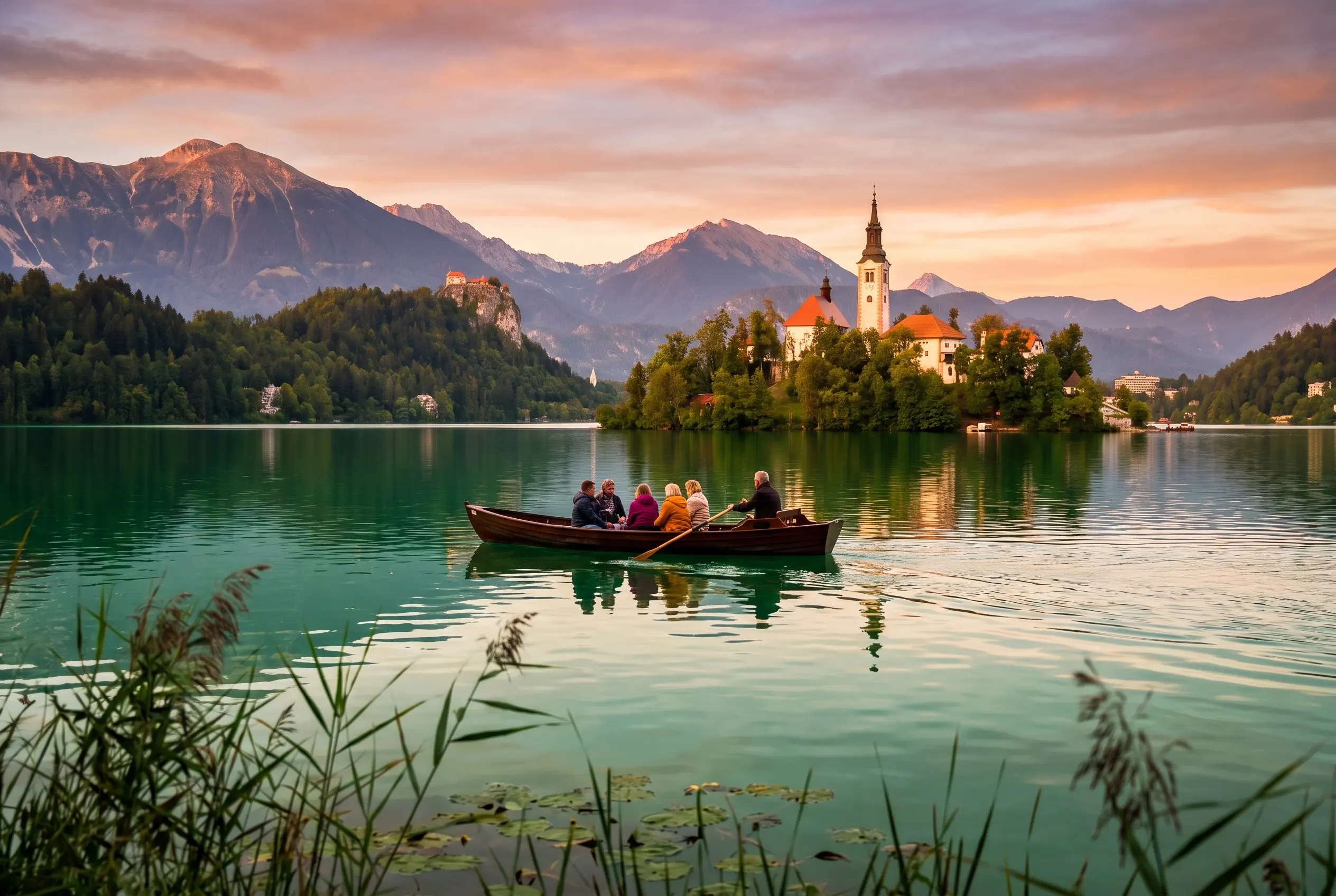
A short cross-border train links Villach to Jesenice in Slovenia, where a connecting local train or bus continues to Lesce-Bled station just outside town. By late afternoon you can be walking the shoreline path around Lake Bled, the island church and its cliffside castle reflected in the water.
Train
Bus
Walk
Day 7
Lake Bled on foot
Circle the entire lake on the flat 6 km shoreline path, then climb briefly to the Ojstrica viewpoint for the postcard view over the island. In the afternoon, a local bus reaches Vintgar Gorge for a walk along its wooden walkways above the Radovna river before the trip winds down.
Walk
Bus
Frequently asked questions
Do you need a car to see the Alps and Lake Bled?
No. Regional trains link the Austrian towns, a seasonal postbus crosses the Grossglockner High Alpine Road, and a cross-border train and local connections reach Lake Bled. The whole route in this itinerary runs on public transport and trails.
Is the Grossglockner High Alpine Road open all year?
No — it typically opens around May and closes for winter by late October or November, snow permitting, and the postbus over the pass only runs in that same window. Outside the season, Zell am See and Villach are still linked directly by train via Salzburg, just without the high-pass crossing.
How do you get from Austria to Lake Bled without a car?
A cross-border train runs from Villach to Jesenice in Slovenia, where a local train or bus continues to Lesce-Bled station, a few kilometres from the lake with a short onward bus or taxi. Some seasons also see direct coach services between Austrian Carinthia and Bled — worth checking before you travel.
What's the best time of year for this route?
Summer (June to early September) gives the most reliable postbus schedule over the Grossglockner and the warmest lake swimming at Zell am See and Bled. Early autumn brings quieter trails and colour in the valleys, but check the pass and postbus schedule are still running before you plan around it.
How much walking is involved?
Most days involve a couple of easy, flat hours on foot — city streets, lake shorelines and gorge walkways — with the high-alpine crossing done entirely by postbus rather than on foot. The Nordkette and Ojstrica viewpoints add short, moderate climbs for anyone who wants a bit more.