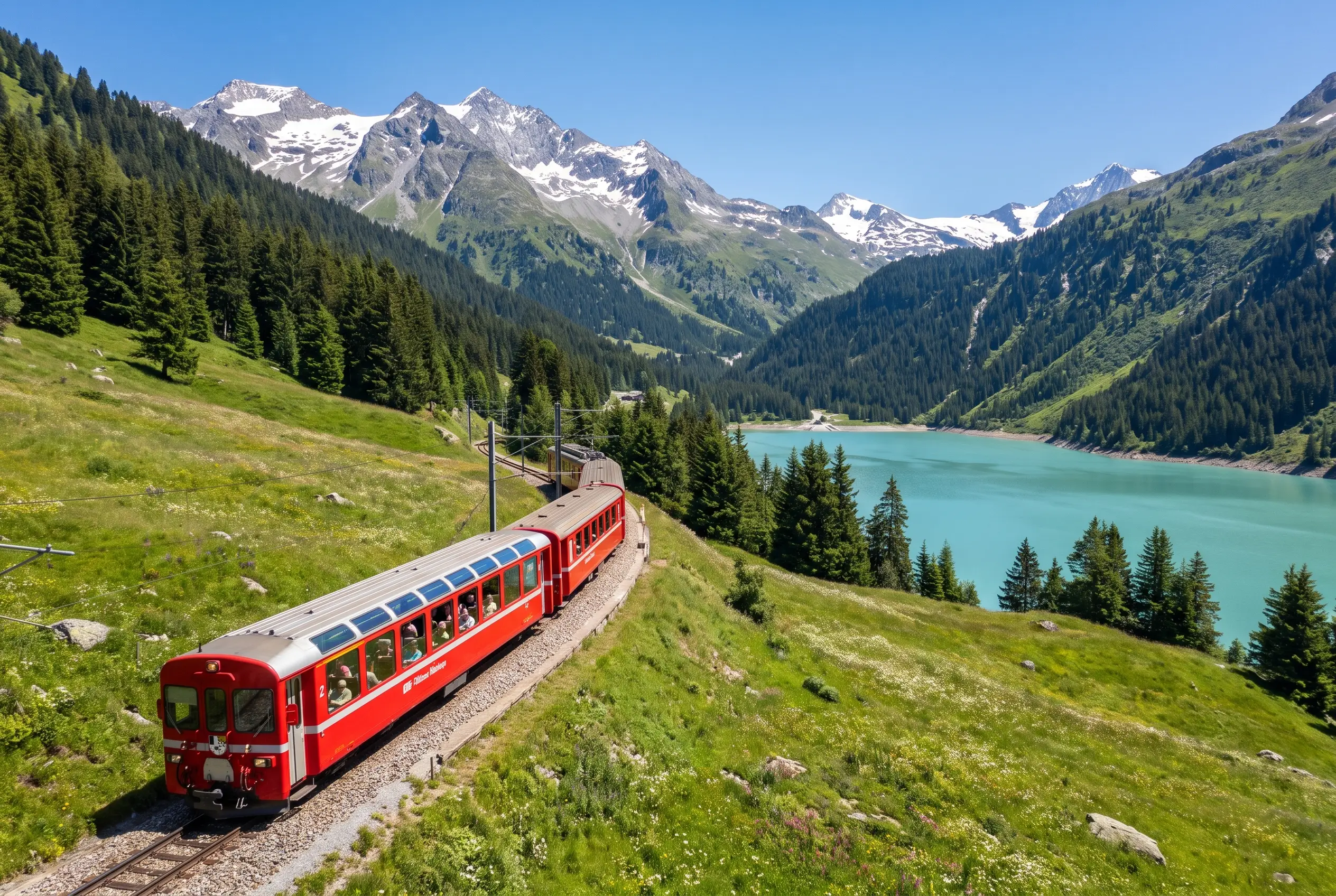
From Zürich to Ticino, cross the country on some of the finest panoramic trains on Earth — one pass, zero rental cars.
7 days Score 94
Train
Walk
Ferry
Switzerland may be the single easiest country in Europe to see entirely by train. This week links the financial capital, the heart of the Bernese Oberland, a car-free mountain village and the sunny lakes of Ticino using nothing but a rail pass, panoramic carriages and a few short walks — the network is dense, frequent and built for exactly this kind of trip.
The route at a glance
ZürichSwitzerland
LucerneSwitzerland
InterlakenSwitzerland
ZermattSwitzerland
MontreuxSwitzerland
LuganoSwitzerland
The itinerary, day by day
Day 1
Arrival in Zürich
Zürich Airport train station sits directly beneath the terminal, so it's a roughly 10-minute ride into Zürich HB — a good moment to activate a Swiss Travel Pass, which covers trains, buses and boats nationwide for the rest of the week. Spend the afternoon around the Altstadt and Lake Zürich promenade.
Train
Walk
Day 2
Zürich to Lucerne
Direct trains to Lucerne run several times an hour and take under an hour, dropping you a few steps from the covered Chapel Bridge and the old town. Spend the day wandering the medieval lanes and lakefront, with an optional short boat trip on Lake Lucerne included in the Swiss Travel Pass.
Train
Walk
Day 3
Over the Brünig to Interlaken
The Luzern–Interlaken Express, part of the GoldenPass network, climbs over the Brünig Pass in around two hours, swapping lake views for alpine meadows along the way. Interlaken sits literally between two lakes, Thun and Brienz, and a short funicular reaches the Harder Kulm viewpoint for a first proper look at the Jungfrau peaks.
Train
Walk
Day 4
Interlaken to car-free Zermatt
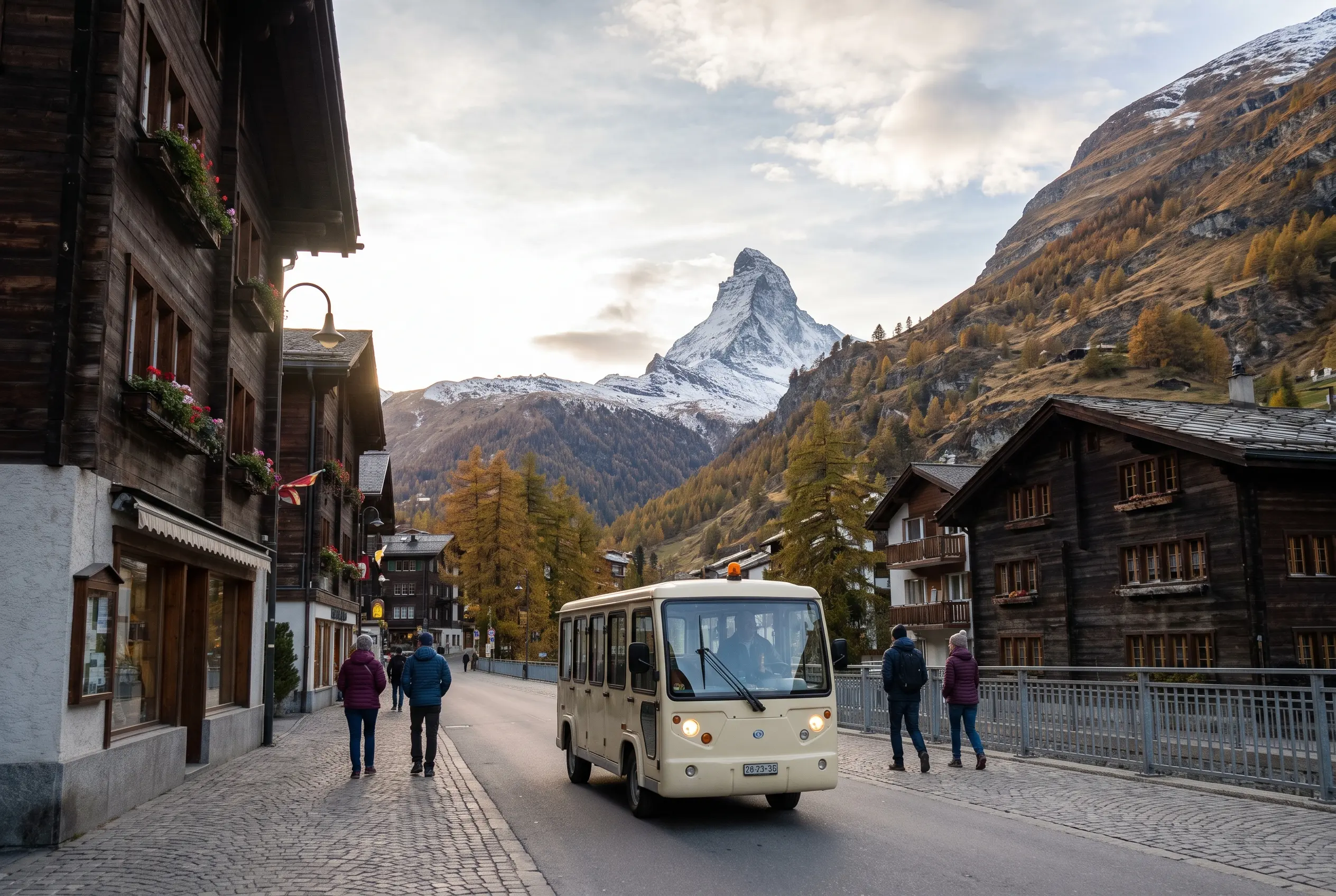
Trains run via Spiez and Visp to Täsch, the last stop reachable by ordinary car — from there, a shuttle train covers the final few minutes into Zermatt itself, which has banned combustion cars since 1961. The whole ride takes around three hours; spend the evening among the electric taxis and horse carriages with the Matterhorn glowing above the rooftops.
Train
Walk
Day 5
Gornergrat, then on to Montreux
A cogwheel train climbs to the Gornergrat in around 35 minutes for one of the best Matterhorn panoramas in the region — the same platform where the famous Glacier Express sets off toward St. Moritz, though today's route heads the other way. By early afternoon, trains retrace the line to Visp and continue west along Lake Geneva to Montreux, roughly three and a half hours door to door.
Train
Walk
Day 6
Montreux, Chillon and onward through the Gotthard
A lakeside bus or a 20-minute walk along the promenade reaches the moated Château de Chillon before the day turns toward Ticino. Trains through the Gotthard Base Tunnel, the world's longest rail tunnel, have cut the crossing of the Alps to well under three hours, so an afternoon departure with a change around Bern or Zürich lands in Lugano by evening.
Train
Walk
Day 7
Lugano and departure
A funicular climbs to Monte San Salvatore for a last panorama, this time over palm trees and a lake instead of glaciers, and a boat cruise on Lake Lugano makes for an easy final morning. From here, trains reach Zürich Airport in around three hours, or Milan Malpensa in about 1h20 for onward flights.
Walk
Ferry
Frequently asked questions
Is the Swiss Travel Pass worth it for this route?
For most travellers, yes — it covers unlimited trains, buses and lake boats nationwide, includes many museums, and gives roughly 50% off cog railways and cable cars like the Gornergrat. Add up the individual point-to-point fares for this itinerary and the pass usually comes out ahead over a week.
Do I need to book seats on the panoramic trains?
Regular regional and intercity trains need no reservation with a valid pass, but named panoramic services with large windows — the Luzern–Interlaken Express and the Glacier Express in particular — often require a seat reservation for a small fee, especially in summer. Book a day or two ahead once your dates are fixed.
Can cars enter Zermatt at all?
No — Zermatt has banned combustion-engine cars since 1961, and only small electric taxis, hotel shuttles and horse-drawn carriages operate within the village. Visitors arrive by train via Täsch, where a shuttle train or a paid car-parking option (for those who drove that far) covers the final stretch.
Could I extend this trip on the Glacier Express instead of heading to Montreux?
Yes — the Glacier Express departs the same Zermatt station and runs about eight hours east to St. Moritz or Davos through Andermatt and Chur, with obligatory seat reservations. Swapping it in adds a day or two versus continuing west to Montreux, so it works best if you can extend past a strict 7-day frame.
How much luggage handling is involved with this many train changes?
Less than it sounds — Swiss stations are step-free with short, well-signed connections, and the SBB luggage-forwarding service can send a suitcase ahead to your next hotel for a fee if you'd rather travel with just a day bag. Most changes in this itinerary give 10–20 minutes, comfortable but not leisurely.