Scottish Highlands
The West Highland Line, CalMac ferries and Citylink coaches thread the glens and lochs — the scenery is huge, and so, honestly, are the gaps between bus stops.
- Train
- Bus
- Ferry
- Walk
The Highlands look like car country, but the region has one of the great train journeys in the world, a dense island ferry network and long-distance coaches stitching the glens together. Reaching Fort William, Oban, Inverness or the Isle of Skye without a car is genuinely easy — it is only the last stretch to a remote trailhead or single-track glen where you start relying on infrequent rural buses or a taxi.
Why it works without a car
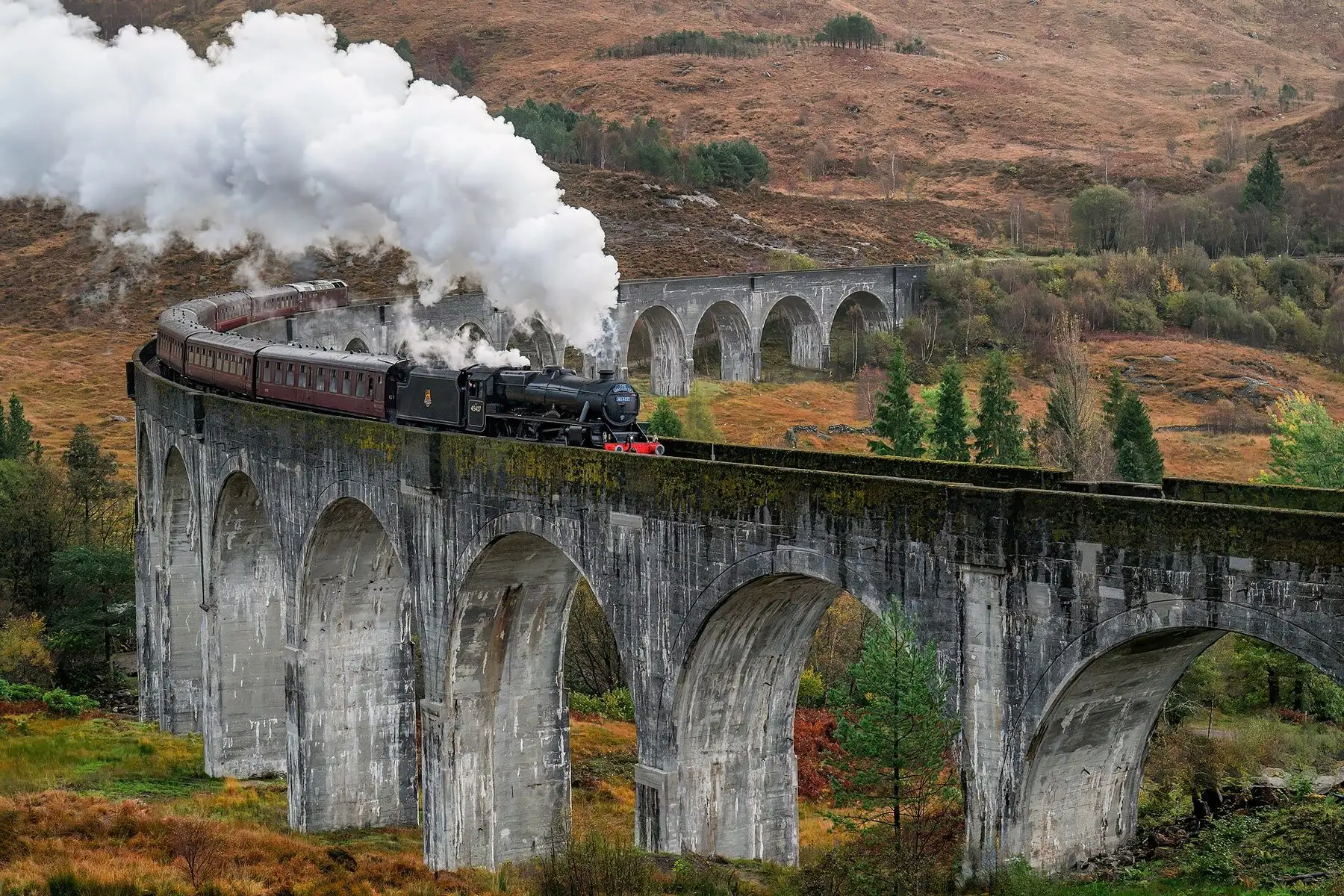
- The West Highland Line from Glasgow to Fort William and on to Mallaig crosses the Glenfinnan Viaduct and is regularly ranked among the world's most scenic railways.
- CalMac ferries link Mallaig and Oban to the Isle of Skye, Mull, Iona and a string of smaller islands, running to a published, year-round timetable.
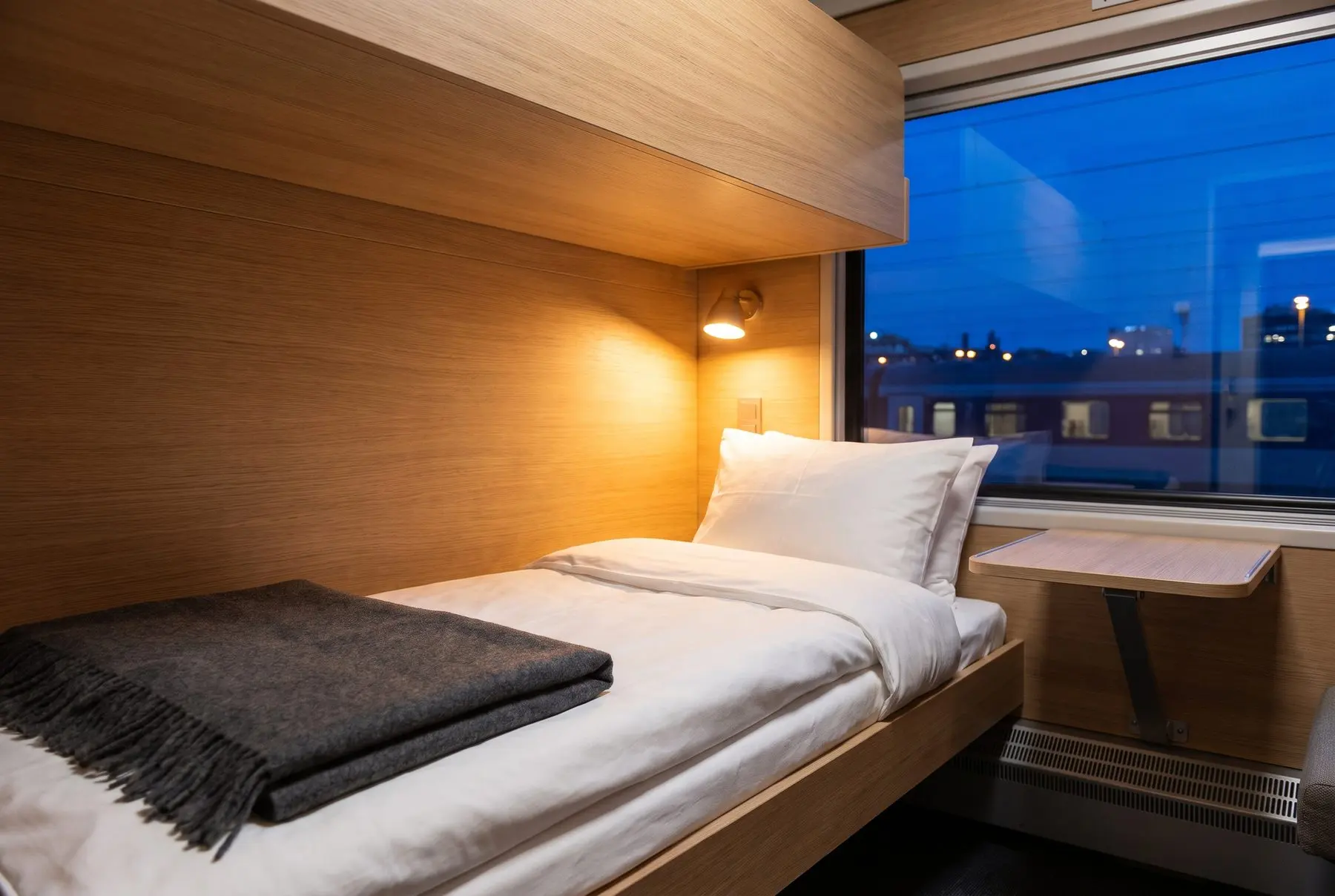
- The overnight Caledonian Sleeper runs from London straight to Fort William, so the whole trip can start and end without a single flight or car rental.
- Scottish Citylink coaches connect Glasgow, Edinburgh, Inverness, Fort William, Oban and Skye on frequent daily schedules, filling in where the rail network doesn't reach.
How to arrive
Glasgow Queen Street is the main gateway to the West Highland Line, with ScotRail trains to Fort William taking roughly 3h45–4h and continuing on to Mallaig for the Skye ferry. It is not a high-frequency line — expect a handful of direct trains a day rather than an hourly service — so book ahead in summer.
For the eastern and northern Highlands, Inverness is the other rail hub, reached from Edinburgh or Glasgow in around 3.5 hours on the Highland Main Line, with onward connections toward the far north and the Isle of Skye by train and bus combined.
- Glasgow to Fort William — about 3h45–4h by train, a few direct services daily.
- Fort William to Mallaig — about 1h20 on the line famous for the Glenfinnan Viaduct.
- London to Fort William — the Caledonian Sleeper runs overnight, about 12–13 hours.
- Edinburgh or Glasgow to Inverness — about 3.5 hours by train on the Highland Main Line.
Getting around
Fort William, often called the outdoor capital of the UK, is small enough to walk end to end, and it anchors the region: Citylink coaches fan out from here to Oban, Inverness, Skye and Glencoe several times a day. Oban plays a similar role on the west coast, doubling as the main CalMac ferry terminal for the southern Hebrides.
Within a town, everything is walkable; between towns, the coach and rail network is genuinely reliable. The catch comes once you leave the main corridors for a single glen or a smaller island, where services can drop to two or three buses a day.
Last-mile gaps
This is the honest weak point of the Highlands. Many of the best trailheads, glens and lochside viewpoints sit down single-track roads with no bus at all, or a rural service that runs once or twice a day, sometimes only on request. Reaching them without a car usually means a taxi from the nearest town, a pre-booked transfer, or planning your hike around the one bus of the day.
Skye itself is easy to reach by bus over the Skye Bridge from Kyle of Lochalsh or Fort William, but exploring beyond Portree — the Quiraing, the Old Man of Storr, Neist Point — leans heavily on a thin seasonal bus network, so build in extra time and a backup plan.
Travelling with luggage
The trains and Citylink coaches have proper luggage racks and hold space, and Fort William, Oban and Inverness are all flat enough town centres to wheel a suitcase around without trouble.
The West Highland Line itself has generous luggage space, but the CalMac ferries and rural buses used for island and glen last-mile connections have less room, so keep bags manageable if that leg is part of your plan.
Tickets & passes
ScotRail sells advance and flexible fares, and a Spirit of Scotland travel pass can pay off for a longer trip that mixes several train and some ferry journeys. Citylink coach tickets are best booked online ahead of busy summer dates, when popular routes do sell out.
CalMac ferry tickets can usually be bought on the day for foot passengers, but booking ahead is wise in July and August. For remote rural buses, carrying cash and checking the operator's current timetable the morning of travel avoids surprises.
Where to stay
Before you use public Wi-Fi on the way
Wi-Fi on trains, ferries, in stations and in cafés is a network shared with other people. A VPN encrypts the connection between your device and the VPN server, one extra layer when you check email or log in to accounts on the move. NordVPN is one option.
See NordVPNFrequently asked questions
Can you explore the Scottish Highlands without a car?
Yes, for the main towns and the classic sights. The West Highland Line, CalMac ferries and Citylink coaches reach Fort William, Oban, Inverness and Skye reliably. It takes more planning for remote glens and trailheads, where rural buses run only a few times a day.
How do you get from Glasgow to Fort William without a car?
The West Highland Line runs direct ScotRail trains from Glasgow Queen Street to Fort William in about 3h45–4h, a handful of times a day. Scottish Citylink coaches cover the same route more frequently and in a similar time.
Can you visit the Isle of Skye without a car?
Getting onto Skye is easy — Citylink coaches cross the Skye Bridge from Kyle of Lochalsh or Fort William straight to Portree. Getting around once there is thinner: the main town is walkable, but iconic spots like the Quiraing or Neist Point rely on a limited seasonal bus network or a taxi.
Are Highlands buses and trains frequent?
On the main corridors — Glasgow to Fort William, Inverness to Edinburgh, the Citylink coach network — services run several times a day and are dependable. Once you leave those corridors for a rural glen or small island, frequency can drop sharply, sometimes to just one or two buses a day, so always check the timetable in advance.
Is it hard to reach hiking trailheads without a car?
Honestly, sometimes yes — this is the real weak spot of the Highlands. Many of the best trailheads sit down single-track roads with no public transport, or a rural bus that passes once or twice a day. A taxi from the nearest town, a pre-arranged transfer, or simply choosing trailheads served by the main coach routes is the practical workaround.
- Country
- United Kingdom
- Region
- Scottish Highlands
- How you travel
- Train
- Bus
- Ferry
- Walk
Keep exploring