Kyoto
A thousand years as a capital left Kyoto with temples on every corner and a transit network dense enough to reach them all — the Shinkansen gets you here, everything else is bus, subway, bike or foot.
- Train
- Bus
- Bike
- Walk
Kyoto was laid out as a grid over a thousand years ago and has spent the centuries since building one of the densest, most reliable transit networks in the world on top of it. The Shinkansen delivers you into the city centre in minutes from Tokyo or Osaka, and from there a web of subway lines, city buses and private railways reaches almost every temple, garden and district without a single car needed.
Why it works without a car
- The Tokaido Shinkansen puts Kyoto Station about 2h15 from Tokyo and roughly 15 minutes from Osaka, arriving right in the heart of the city.
- A single IC card (ICOCA or Suica) taps onto every subway line, city bus and private railway in town — no separate tickets to juggle.
- Private railways like the Keihan and Hankyu lines, plus the retro Randen tram, reach outlying districts such as Arashiyama and Fushimi directly, without a transfer to a car or taxi.
- Kyoto's flat, grid-planned streets make it one of the most bike-friendly historic cities in Asia, with rental shops on nearly every block.
How to arrive
Kyoto Station is one of the great rail hubs of Japan, served directly by the Tokaido Shinkansen from Tokyo, Nagoya and Osaka, plus regular JR lines to Nara, Kobe and the rest of the Kansai region. A Japan Rail Pass, if you already have onward travel planned, covers the Shinkansen leg too.
From Kansai International Airport, a direct limousine bus or a train-plus-transfer via Osaka gets you into central Kyoto in about 75–90 minutes — no rental counter required.
- From Tokyo — about 2h15 direct on the Tokaido Shinkansen.
- From Osaka — about 15 minutes by Shinkansen, or around 30 by regular JR train.
- From Nagoya — about 35–50 minutes direct on the Shinkansen.
- From Kansai Airport — about 75–90 minutes by direct bus or connecting train.
Getting around
The Karasuma and Tozai subway lines cross the city centre, and a thick grid of city buses covers everywhere the subway does not — tap an IC card at the door and you are set. Higashiyama, with Kiyomizu-dera and Gion, is compact enough to cover almost entirely on foot once a bus or subway drops you at its edge.
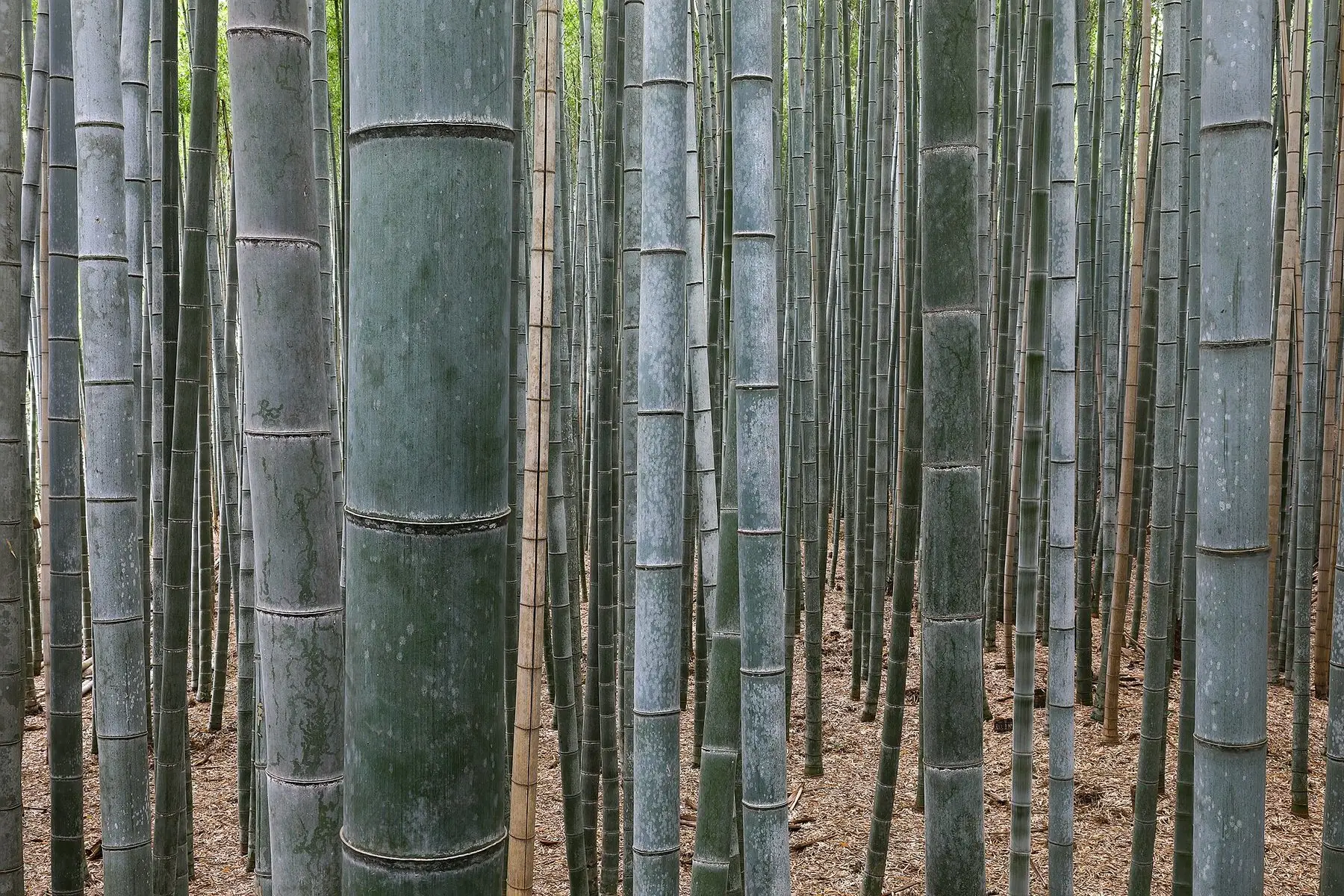
Arashiyama, on the western edge, is reached directly by the JR Sagano Line, the Keifuku Randen tram or the Hankyu line — pick whichever fits your route — and its bamboo grove and riverside paths are then entirely walkable or, if you prefer, coverable by rented bike.
Last-mile gaps
Fushimi Inari Taisha, with its thousands of vermillion torii gates, is barely a two-minute walk from JR Inari Station or the Keihan Fushimi-Inari stop — one of the easiest last-mile connections of any major sight in Japan. Beyond the main gates, though, the full hillside trail is on foot only, which is simply the nature of a mountain shrine walk.
Kinkaku-ji (the Golden Pavilion) sits further from the rail network and relies on a city bus of around 40 minutes from the station — pleasant on a quiet day, but those buses can crawl through surface traffic during cherry blossom and autumn foliage season, so build in extra time then.
Travelling with luggage
Kyoto Station has lifts, escalators and step-free routes throughout, and the Shinkansen has designated oversized-luggage spaces if you reserve them in advance. Subways and buses are manageable with one bag but get tight with a large suitcase at rush hour.
Many travellers skip carrying bags altogether: same-day or next-day luggage-forwarding services (takuhai) send suitcases straight from the airport or one hotel to the next, which is one more reason a car never enters the picture.
Tickets & passes
An ICOCA or Suica IC card, loaded once and topped up as needed, works across subway, bus and most private railways in the city — by far the simplest option for most visits. Kyoto City Bus also sells one-day and two-day unlimited bus passes if your plan is bus-heavy.
If your trip continues beyond Kyoto to Tokyo, Osaka or Hiroshima, weigh a Japan Rail Pass against point-to-point Shinkansen tickets before you buy — it only pays off with enough long-distance legs.
Where to stay
Before you use public Wi-Fi on the way
Wi-Fi on trains, ferries, in stations and in cafés is a network shared with other people. A VPN encrypts the connection between your device and the VPN server, one extra layer when you check email or log in to accounts on the move. NordVPN is one option.
See NordVPNFrequently asked questions
Can you visit Kyoto without a car?
Yes, easily — Kyoto is one of the best car-free cities in the world. The Shinkansen brings you in, a dense subway, bus and private-railway network covers the whole city, and the flat streets make walking and cycling genuinely pleasant.
How do you get from Tokyo or Osaka to Kyoto without a car?
The Tokaido Shinkansen is the standard route: about 2h15 from Tokyo and around 15 minutes from Osaka, arriving directly at Kyoto Station in the city centre.
Do you need a car to see Kyoto's temples?
No. Fushimi Inari and Arashiyama sit right on train lines, Higashiyama's temples cluster within a walkable district, and even Kinkaku-ji, the furthest of the major sights from the rail network, is a straightforward city bus ride away.
What is the best transit pass for Kyoto?
For most visits, an ICOCA or Suica IC card is simplest — tap in and out of subways, buses and private railways with no need to plan around a specific pass. If you expect to ride buses constantly, a one- or two-day unlimited bus pass can work out cheaper.
Is Kyoto bike-friendly?
Very. The historic grid layout is flat and easy to navigate, rental shops are common near the station and in tourist districts, and cycling is a popular way to combine several nearby sights — Arashiyama in particular is often explored by bike along the river.
- Country
- Japan
- Region
- Kansai
- How you travel
- Train
- Bus
- Bike
- Walk
Keep exploring